
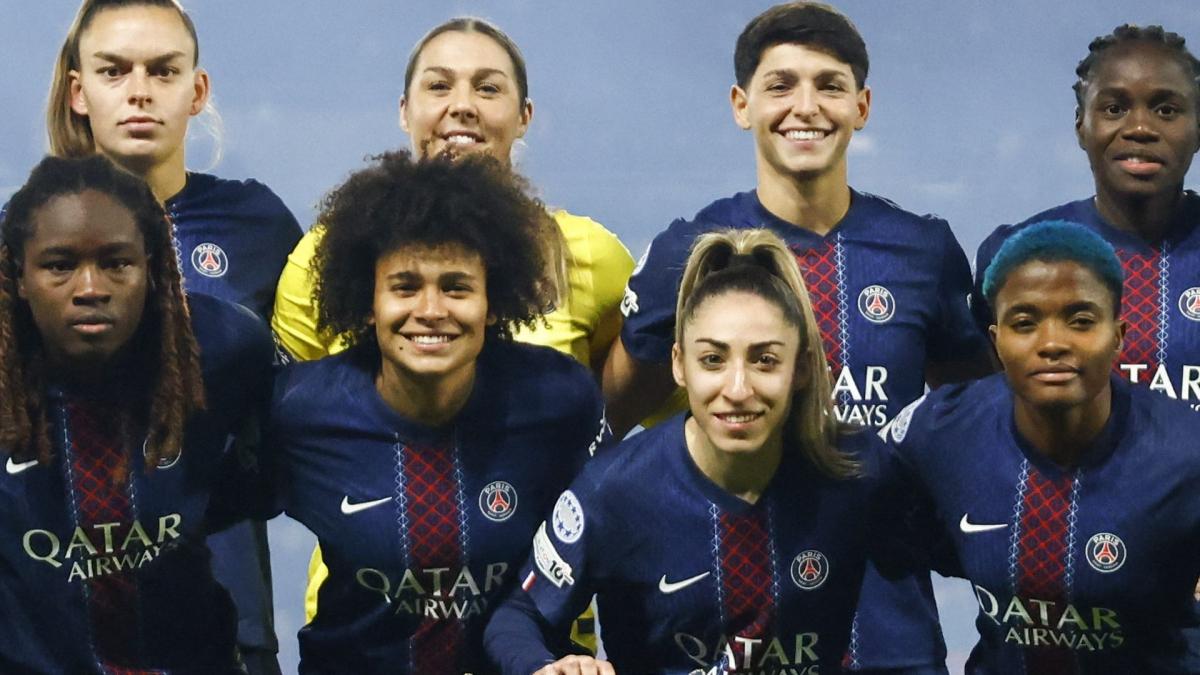
D1 Arkema Players Speak Out Against Inequality in Football
The captains of the D1 Arkema and Second League teams have taken a bold stand against ongoing inequalities in professional women’s football. In a press release shared recently, they voiced their concerns with the support of the National Union of Professional Footballers (UNFP), highlighting the lack of progress in discussions regarding a collective agreement tailored specifically for women’s football.
A Call for Equality in Football
The press release’s slogan, “Same football, same requirements. Still not the same rights,” encapsulates the players’ frustrations. They have pointedly called attention to the fact that negotiations for such a collective agreement have stalled for the past three years. “This is no longer understandable, it is no longer acceptable,” they emphasized, stressing the urgent need for change.
In an extraordinary show of unity, the captains defined their roles and responsibilities explicitly. They wear the armband each week not just as leaders on the pitch, but as representatives of their sport. “Today, we can no longer remain silent,” they declared, underscoring the importance of their voices in advocating for equitable conditions.
Highlighting Structural Issues
The captains also expressed their concerns about the fragility of women’s football clubs in France, particularly pointing to the critical situation at the Dijon club. They lamented, “Twenty years of sporting commitment are dying out due to lack of a buyer and sufficient support,” referencing the troubling closures of clubs like Soyaux and Bordeaux.
These incidents are not viewed as isolated accidents; rather, the captains assert they represent a deeper structural problem within the landscape of French professional football. While they acknowledge some progress since the establishment of the Women’s Professional Football League (LFFP), they argue that the crucial element—a collective agreement—remains absent.
The Need for a Collective Agreement
Drawing attention to the year 2026, the players noted that professional women athletes still lack a collective agreement, despite performing the same sport under equal conditions as their male counterparts. They emphasized that “we play the same sport, train with the same requirements, and face the same physical constraints and risks.”
The gap in progress between men’s and women’s football is glaring. The captains lament that while men’s football continues to advance, women are often told to be patient. “It’s not a question of priority. It’s a question of choice,” they said firmly.
Demand for Fair Treatment
The captains clarified that their demands are not for special treatment but rather for a “fair framework.” They stress that a collective agreement isn’t a privilege; it’s a fundamental necessity to protect players’ health, regulate working conditions, secure careers, and encourage authentic social dialogue.
In a determined call to action, the captains urged social partners to expedite discussions, insisting that an agreement be formalized “before the start of the next season.” They reaffirmed their central message by stating, “Because we play the same football. Because we deserve the same rights.”
Conclusion
The pressing issues raised by the D1 Arkema captains highlight the necessary steps toward achieving equality in football. As they advocate for a collective agreement, their voices resonate as a clarion call for fairness and recognition in the realm of professional women’s sports. It is a pivotal moment that underscores the need for change in French football, one that demands attention and action from all stakeholders involved.