
The Rise of Inflation in Spain: An Overview
The inflation rate of the Spanish economy has surged to 3.3% year-on-year in March 2025. This marks the first month where consumers tangibly feel the repercussions of heightened tensions in the Middle East, particularly due to the conflict in Iran. According to the National Institute of Statistics (INE), this spike is primarily driven by the significant increase in oil prices, which have subsequently raised fuel costs.
Impact of Fuel Prices
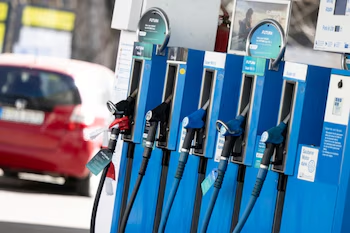
The primary contributor to this inflationary rise has been the escalation in the cost of fuels and lubricants for personal vehicles. The previous year saw a notable decrease in electricity prices; however, this year, the drop has been less dramatic, and prices for heating oil have paradoxically risen. March 2025 data reveals a stark contrast to the trends seen through the previous year. Such fluctuations in fuel prices have created a ripple effect, driving up overall consumer prices and leading to the most substantial increase in the Consumer Price Index (CPI) since June 2024.
Core Inflation Remains Stable
Despite the rise in overall prices, the core inflation rate, which excludes volatile food and energy prices, has remained stable at 2.7%. This stability suggests that the broad price increases are largely influenced by energy-related components. The underlying inflation data indicates that the pressures on consumer prices stem largely from these unpredictable variables.
Harmonized Consumer Price Index (IPCA)
The Harmonized Consumer Price Index (IPCA), which allows for comparisons of Spanish inflation with that of other European nations, also reflects a growth trend. The advanced annual rate presently stands at 3.3%, showcasing an increase of eight tenths from prior figures. Harmonized underlying inflation currently sits at 2.8%.
Monthly Variations in Inflation
In March, the monthly variation in the IPCA registered at 1.5%, noticeably surpassing the increase recorded by the national CPI. As a result, consumer prices have reported a rise of 1.0% since January.
Concluding Thoughts
The response of the Spanish economy to external factors, particularly the conflict in Iran, highlights the interconnectedness of global events and domestic economic conditions. As fuel prices influence broader inflation metrics, consumers and policymakers alike must remain vigilant and consider their implications on spending, investment, and general economic stability in Spain moving forward.