
Background of the Dispute
A noteworthy ruling from the Quilmes Court of Civil and Commercial Appeals has emerged from a dispute among neighbors in Quilmes Oeste, focusing on the removal of trees planted near a shared wall. This case is indicative of the tension that can arise due to vegetation encroaching on property lines.
The Initial Complaint
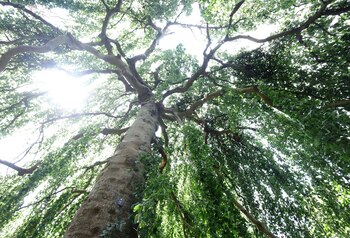
The conflict began in 2022 when a landowner filed a lawsuit against the occupants of an adjacent property. The plaintiff demanded the removal of several trees, including a cypress and a willow, located within three meters of the dividing wall. He argued that the trees caused significant inconveniences, citing issues such as:
- Debris like leaves, fruits, and pine needles littering his roof, patio, and swimming pool.
- Damage to the electric fence due to overhanging branches, leading to false alarms during windy weather.
Despite his complaints, the defendant neighbors claimed that the trees were properly maintained and did not pose a threat to the neighboring property.
Initial Court Ruling
The case first appeared in a Quilmes Court of First Instance, where the judge recognized the neighborly disputes and the implications of the dividing wall with an electric fence. The ruling, based on Article 1757 of the Civil and Commercial Code, favored the plaintiff, citing an expert agronomist’s report that suggested the trees posed an elevated risk due to their size and age.
The court’s decision ordered the removal of the trees and compensation for damages incurred by the plaintiff.
Appeals and Subsequent Developments
Both parties appealed. The complainant questioned the decision on non-material damages, while the defendants argued that the ruling lacked substantial evidence and proposed pruning as a less drastic solution.
Final Decision of the Appeals Court
Upon reviewing the case, the Quilmes Chamber of Appeals revisited the application of liability in this scenario. They emphasized that the initial complaint focused on nuisance and inconvenience rather than the potential hazard of the trees falling. The Chamber modified the lower court’s ruling, stating:
- Rigorous pruning would suffice to mitigate the issues without necessitating full removal of the trees.
- They upheld compensation for economic damages , such as cleaning expenses but denied any claims for moral damages, citing insufficient evidence.
Calculation of Damages and Costs
The Court further specified how interest on damages would be calculated. Interests on cleaning and related expenses were set at a straightforward rate of 6% until the expert’s report was filed, transitioning thereafter to the highest passive rate defined by the Bank of the Province of Buenos Aires.
Costs from the appeal process were to be shared equally, reflecting the mixed outcomes for each party.
Conclusion
This case highlights the importance of neighborly communication and proper maintenance of property boundaries. While the ruling favored the preservation of greenery—emphasizing rigorous pruning rather than removal—it also reinforces the rights of property owners to seek compensation for inconveniences. Such legal battles underline the complexities involved in maintaining harmonious neighborhood relationships amidst growing vegetation and urban development.