
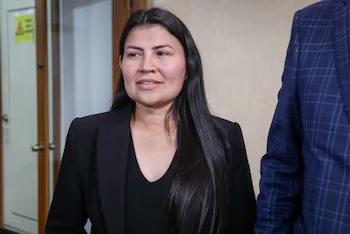
Background of the Case
On March 12, 2026, the Special Investigative Chamber of the Supreme Court of Justice issued a controversial security measure against Congresswoman Karen Manrique and her colleague Wadith Manzur. The measure pertains to allegations of irregularities within the National Unit for Disaster Risk Management (Ungrd). This significant legal move draws attention not only for its implications for the involved congress members but also for broader concerns about corruption in Colombia’s political landscape.
Details of Manrique’s Voluntary Surrender
Initially, Karen Manrique had voluntarily presented herself to law enforcement at a local police station. At that time, she was not under a formal arrest warrant, which raised questions among legal observers about the adequacy and timing of the Supreme Court’s actions. Manrique, recently re-elected for her congressional term, maintained that her intentions were transparent, displaying a willingness to cooperate with authorities.
The Developments on March 12
On the very same day, after further developments in the investigation, Karen Manrique’s situation escalated. She returned to the Tame Police Station in Arauca, where her capture was made effective. During this procedure, authorities read her rights, formalizing her arrest amidst the ongoing scrutiny of her actions related to the Ungrd contracts.
Implications of the Arrest
Manrique’s arrest can have far-reaching implications for her political career and the ongoing discussions about corruption within Colombia’s government. The Supreme Court’s involvement signals a critical shift in how such cases are handled, emphasizing accountability at all levels of governance. The case is not just about Manrique; it’s a reflection of a systemic issue affecting public trust in political institutions.
The Public’s Reaction
Public reaction to Karen Manrique’s arrest has been mixed, reflecting a societal division surrounding political figures perceived as corrupt. Some citizens advocate for a thorough investigation, demanding justice and transparency, while others express concern about the potential political motivations behind the arrest.
Conclusion
The investigation into Karen Manrique and her alleged involvement in corruption linked to the Ungrd contracts serves as a pivotal moment in Colombian politics. As the case unfolds, it will likely shape the narrative surrounding governance, accountability, and the fight against corruption in the country. The implications of her arrest raise crucial questions about the integrity of elected officials and the processes in place to ensure ethical governance.