
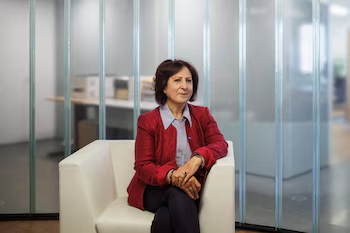
Assessment of Teresa Peramato’s Candidacy
The Congress of Deputies is currently evaluating the candidacy of Teresa Peramato to succeed Álvaro García Ortiz as the State Attorney General. This evaluation is crucial for the stability of the Public Ministry, especially following García Ortiz’s resignation due to a two-year disqualification for a crime involving the revelation of secrets concerning a political associate.
Background of the Current Situation
García Ortiz’s resignation has generated a significant political and legal discourse. The Congress’s evaluation of Peramato is governed by Article 29 of the Organic Statute of the Public Prosecutor’s Office. This assessment is necessary but non-binding, allowing Congress to review her qualifications thoroughly. Peramato’s appearance before the Justice Commission is scheduled for 1:00 p.m. Thursday.
Qualifications and Support for Peramato
Recent developments have shown strong backing for Peramato. The General Council of the Judiciary (CGPJ) recently concluded that she meets the necessary requirements to be appointed as attorney general. With a career spanning 35 years, primarily centered on combating gender violence, she presents a well-regarded profile. Her resume aligns with the demands of the Statute, which necessitates at least fifteen years of professional legal experience.
Moreover, Peramato is not disqualified from being appointed based on prior governmental roles, as she hasn’t held any high-ranking positions in the past five years. This aligns with the statutory provisions post the contentious appointment of her predecessor, Dolores Delgado, who faced criticism for her quick transition from the Ministry of Justice to the Attorney General’s office.
Political Reactions and Concerns
While the concerns surrounding García Ortiz’s appointment were steeped in controversy, Peramato’s case is met with a cautious reception from political factions. The Popular Party, represented by Miguel Tellado, emphasized that the significant issue is not the government’s choice but the potential politicization of the Attorney General’s Office itself. Critics, including Santiago Abascal of Vox, have voiced skepticism regarding Peramato’s lack of high-profile public positions, questioning whether this qualifies her as suitable for the role.
Implications for the Future of the Public Ministry
Regardless of the outcome of her appointment, the implications for the Public Ministry are profound. The postgraduate evaluation of candidates for high judicial positions during this politically charged climate is reflective of ongoing discussions about judicial independence versus political influence. If appointed, Peramato would represent the fourth individual to hold the office during Pedro Sánchez’s term, amid ongoing dialogues over the stability and credibility of judicial appointments in Spain.
Conclusion
The current proceedings not only determine who will lead the State Attorney General’s Office but also set a precedent for how future appointments may be scrutinized in the light of political influence. The ultimate decision will thus resonate with implications far beyond Peramato’s individual qualifications, shaping the future trajectory of Spain’s judicial landscape.