
Political Turmoil: Spanish Government Under Scrutiny
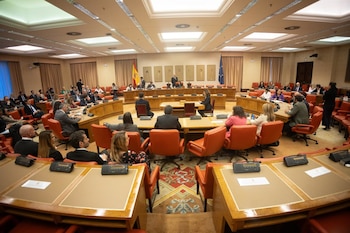
The Spanish political landscape is witnessing a period of heightened tension as the Permanent Diputación of the Congress turned down requests for several key governmental officials, including President Pedro Sánchez, to appear before the parliament. This refusal came despite backing from Junts, a Catalan party, for the bulk of requests from the Popular Party (PP), aided by Vox, another right-wing party.
The decision to deny appearances has raised questions about transparency and accountability within the government, especially as the country prepares to enter the ordinary session period next week. The PSOE (Spanish Socialist Workers’ Party) has firmly stated its opposition to all appearances, attributing this stance to a desire not to “feed the noise” generated by the opposition, notably the PP. In support of the PSOE, parties like ERC (Republican Left of Catalonia) , Bildu , and PNV (Basque Nationalist Party) have voted against these motions, showcasing an apparent coalition amidst the opposition’s calls.
Calls for Accountability and Government Management
Despite the PSOE’s firm position, Junts voted in favor of six out of nine requests. The expressions of dissent did not resonate with all parties, as evident from Podemos abstaining in several votes. The absence of consensus has led to repeated votes on various issues, underscoring the fragmented nature of current Spanish politics.
Among the rejected appearances were those of Minister of Transportation Óscar Puente , whose “Ferrovary Chaos” incident faces PP’s scrutiny, and Minister of Defense Margarita Robles , who was asked to provide insights into her management of ongoing firefighting efforts . In each case, Podemos chose to abstain, which some critics argue may suggest a lack of commitment to hold the government accountable. However, the PSOE clarified that Puente will still address Congress on September 4 and Robles will present her report on September 5.
Emerging Challenges and Conflicts of Interest
As these events unfold, the PSOE, Sumar, and allied parties have positioned themselves firmly against the opposition’s call for Sánchez to address the corruption allegations emerging from his government. Allegations concerning Begoña Gómez, the First Lady, have been particularly damaging, overshadowing responses regarding party integrity. Junts, importantly, abstained on these corruption motions, reflecting a more cautious approach to political maneuvering.
The discussions surrounding Minister of Ecological Transition Sara Aagesen to respond to fire management also faced rejection. Alongside this, there were proposals for Minister of Equality Ana Redondo to clarify intended measures against pervasive “machismo” within the political landscape, which the PP has condemned in their criticism of the PSOE and its leadership.
Future Implications and Debt Management Issues
Amidst these political struggles, the PP’s request for First Vice President and Minister of Finance María Jesús Montero to detail plans for addressing debt to autonomous communities was also dismissed. This move signals the challenges the current administration faces in tackling fiscal responsibility alongside governance issues.
Additionally, requests regarding other ministers, including Elma Sáiz on immigration crises and Félix Bolaños regarding controversial decisions about the Attorney General, faced similar fates of rejection. Lastly, the PP’s attempts to interrogate Interior Minister Fernando Grande-Marlaska on a significant contract awarded to Huawei for data management also met resistance in the Permanent Diputación.
Our political system is at a crossroads, with ongoing scrutiny and debates shaping the public perception and operational integrity of the Spanish government. As parties strategize their next moves, the foundation for future governance appears uncertain.
Spanish citizens are keenly watching these developments, as the implications of the current discourse will resonate through public policy and national sentiment in the coming months. Should the government fail to address these pressing issues, the public outcry may lead to significant shifts in the political arena, reshaping alliances and altering the fabric of governance in Spain.