
Colonel Víctor Revoredo Denounces Aragua Train Operations in Peru
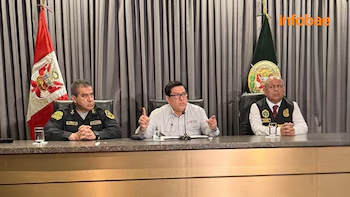
Colonel Víctor Revoredo, head of the newly formed Extortion Investigation Division of the National Police (PNP), recently confirmed the ongoing operations of the notorious international criminal organization known as the Aragua Train in Peru. His statements have raised significant concerns regarding corruption within the National Penitentiary Institute (INPE), particularly pointing out alleged bribery involving its director, Ivan Paredes.
The Presence of the Aragua Train
During an appearance on the television program by journalist Milagros Leiva, Revoredo asserted that the Aragua Train has not been fully dismantled and continues to pose a threat within the country. This contradicts previous claims made by former president Dina Boluarte, who stated earlier this year that the organization was “practically dismantled” through efforts by the Ministry of the Interior.
Originating from the Venezuelan prison of Tocorón, the Aragua Train is classified as a terrorist organization by the United States and has extended its operations into Colombia, Bolivia, and Chile, where it is linked to a range of criminal activities, including drug trafficking, extortion, kidnappings, and murders.
Corruption in the Prison System
Revoredo highlighted increasing violence associated with the Aragua Train, fueled by established criminal networks such as the Cruz Arce brothers, known as “The Octopuses.” He pointed out that there is a significant lack of control within the INPE, suggesting systemic corruption that allows such organizations to thrive.
The colonel’s remarks emphasize the urgent need for reforms in the resocialization processes currently in place. He voiced his frustrations, noting that well-known criminals continue to emerge from the penal system without undergoing any genuine rehabilitation. He described the corruption issue as a “cancer,” underscoring the severity of the situation.
Government Responses
In light of these concerning revelations, Minister of Justice Walter Martinez announced disciplinary actions against Paredes, citing grounds of alleged bribery and neglect of duties. Prime Minister Ernesto Álvarez also indicated that decisions concerning Paredes’ future in the INPE are forthcoming.
In response to growing criminal activity, interim President José Jerí has enacted emergency measures, including isolating gang leaders and cutting off electricity in prisons. Revoredo expressed confidence that these measures will gradually mitigate the issue, reiterating that the constitutional rights of these criminals have been misused.
Increasing Crime and Organized Responses
As organized crime continues to escalate, particularly in Lima and Callao, where extortion rates rose to 36% and 33% respectively over the past year, the government has declared a state of emergency. Revoredo was appointed to head the new Extortion Investigation Division shortly after these developments, tasked with counteracting criminal gangs effectively.
This division will consist of specialized agents and operational intelligence teams aimed specifically at addressing extortion in critical sectors like transportation. The Minister of the Interior, Vicente Tiburcio, praised Colonel Revoredo for his resilience and commitment to tackling extortion.
Conclusion
The persistence of the Aragua Train and the embedded corruption within the INPE are critical issues facing Peru today. As Colonel Revoredo assumes a leadership role in confronting these challenges, the effectiveness of government responses will be closely scrutinized. The call for structural reforms within the prison system and a dedicated approach to dismantling organized crime will be pivotal as Peru navigates this complex landscape.