
Colombian Egg Exports to the United States: A New Era
Introduction of Shell Egg Exports
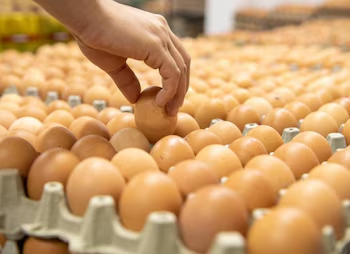
Recently, the United States has granted permission for the export of shell eggs from Colombia aimed at industrial processing. This pivotal decision marks a significant milestone for the Colombian poultry industry and opens doors to one of the most competitive markets globally. Notably, this new authorization eliminates the requirement for an import permit or prior health certificate, facilitating easier exports to six American plants.
Government Support and Collaboration
Diana Morales, Colombia’s Minister of Commerce, Industry, and Tourism, has lauded this initiative. She attributes the success to effective coordination among various entities, including the Colombian Agricultural Institute (ICA), the Colombian Embassy in Washington, and the National Federation of Poultry Farmers of Colombia (Fenavi). According to Morales, this accomplishment exemplifies the progress made under President Gustavo Petro’s administration in diversifying export opportunities and enhancing Colombia’s global trade presence.
Health System Maturity and Trade Relations
The authorization reflects the robustness of Colombia’s health system, known for its rigorous safety protocols and traceability. This reliability significantly bolsters technical and commercial relationships with the United States. The Colombian poultry sector stands out, ensuring high sanitary conditions, which help maintain access to demanding international markets.
Industrial Processing of Eggs
The shell eggs intended for industrial use undergo a meticulous processing regimen. After washing, disinfection, and inspection, they are mechanically broken to separate the components: white, yolk, and shell. These eggs can be transformed into various egg products, such as liquid, frozen, or powdered forms, which are essential ingredients in mayonnaise, ice cream, and baked goods. Additionally, the shell is converted into calcium carbonate powder, a dietary supplement favored for its high absorption rate and low cost.
Colombia’s Egg Consumption and Production
Colombia’s position as a leading egg consumer is notable, with estimates projecting a per capita consumption of 365 eggs annually by 2025. This translates to one egg per person per day, underscoring its integral role in the Colombian diet. The total national egg production is expected to reach 19 billion units by 2025, marking a 7.7% increase compared to 2024.
Export Growth and Market Expansion
In terms of export growth, the Colombian poultry sector has seen remarkable advancements. Between March 2024 and early 2025, Colombia exported 149 containers, amounting to 38 million shell eggs, generating over USD 4.8 million in revenue. The country has opened 11 international markets for eggs and chicken thus far in 2025, with ambitions to expand to Japan and Haiti soon.
Ongoing Challenges in the Poultry Sector
Despite the progress, challenges persist in the poultry sector, particularly regarding road infrastructure. The condition of roads in Santander raises concerns, as poor infrastructure impacts transportation efficiency and limits market access. The Board of Directors of Fenavi has expressed disappointment that recent investments in road infrastructure have overlooked this crucial area, which could hinder continued growth.
Conclusion
In conclusion, the new authorization for Colombian egg exports to the United States stands as a landmark achievement for the national poultry industry. With ongoing government support, a mature health system, and a commitment to quality, Colombia is poised to enhance its footprint in international markets. Nonetheless, addressing infrastructure challenges will be essential for sustaining this momentum.