
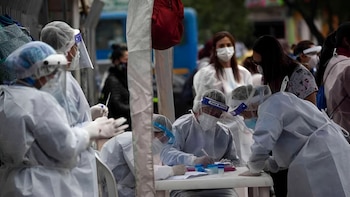
Colombia’s public health landscape is increasingly complex, marked by epidemiological , social , and environmental transitions that exacerbate territorial inequalities and health risks. In light of these challenges, the thought center *Thus We Go in Health* has released its Annual Public Health Report for 2025, providing a detailed analysis of the nation’s most pressing health issues, including communicable diseases , vaccination , and maternal-child health .
Now you can follow us on Facebook and in our WhatsApp Channel
Based on official statistics, the report adopts a comprehensive and intersectoral approach to assess advancements and gaps within Colombia’s health system, viewed through a territorial and social prism. As stated in the report, “The need for integral and non-fragmented approaches, in which the health of populations is understood from their multiple determinants” is more crucial than ever.
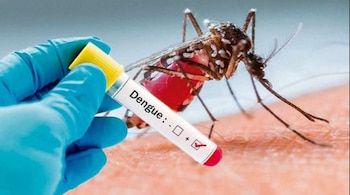
One of the most alarming findings of the report highlights the epidemic behavior of dengue for 2024. The country reached the highest peak in its history, affecting over 320,000 people and categorizing about 3,000 of these cases as serious. This troubling trend reflects a 154% increase compared to 2023, attributed largely to climatic factors such as the El Niño phenomenon .
The challenges extend beyond dengue. In 2025, yellow fever prompted a health emergency, with 93 confirmed cases and 37 deaths by June alone—almost four times the number reported in 2024. The Tolima and Putumayo departments emerged as the most affected areas, evidencing a dangerous territorial concentration of health risk.
These outbreaks may signify the interplay of climate change, population mobility, and existing deficiencies in vector control and prevention, necessitating comprehensive and sustainable responses from health authorities.

The report highlights significant inequalities in maternal-infant health , despite some advancements. Child malnutrition has progressively decreased over the last two decades, from 14.87 cases per 100,000 children under five to 8.78 in 2023 . However, regions such as La Guajira continue to report alarming figures, where malnutrition remains a major driver of infant mortality.
Notably, perinatal mortality and mortality rates among children under five years have seen decreases of 56% and 50% , respectively, from 2005 to 2023 . Meanwhile, maternal mortality is on a downward trajectory, following the peak recorded during the pandemic in 2020—the most critical point in 20 years. Yet, it is significant to note that “2024 figures are still preliminary and need comprehensive analysis for trend confirmation,” as cautioned in the report.

The report documented a 6% increase in cases of tuberculosis in 2024, with 21,418 diagnoses reported. Conversely, Covid-19 infections have significantly declined by 2025, with 4,495 infections and 74 deaths recorded until week 28. The Jn.1 variant remains the most widely circulated variant in the country.
On the front of sexually transmitted infections (STIs) , a rise in the prevalence of HIV among young adults in major cities is alarming, although mortality rates exhibit a slight decrease. Notably, gestational and congenital syphilis represent a critical concern: more than 9,840 cases (preliminary data) were reported in 2024, signifying deficiencies in prenatal care and unequal access to health services.

Despite global advancements in immunization, the report raises concerns about low vaccination coverage against human papillomavirus (HPV) in Colombia, which stands at only 60% , well below the 90% recommended by the World Health Organization (WHO). This deficiency has contributed to 1,954 deaths from cervical cancer in women in 2024.
Furthermore, monitoring vaccination indicators for diseases such as measles , rubella , whooping cough , and hepatitis B has been challenging due to information gaps from the Ministry of Health and the National Institute of Health. These deficiencies impede effective monitoring and response efforts.
A groundbreaking aspect of this report is the inclusion of testimonies from community leaders in regions like Soledad , Maicao , Sibundoy , and Ciénaga . These leaders detail ways in which diseases are perceived and addressed within their cultural and environmental contexts. Their narratives emphasize “The insufficient and late institutional response, especially in rural and dispersed areas,” thereby highlighting the critical need for differentiated policies tailored to the specific characteristics of each territory.
The full *Thus We Go in Health* report is accessible at the following link.