
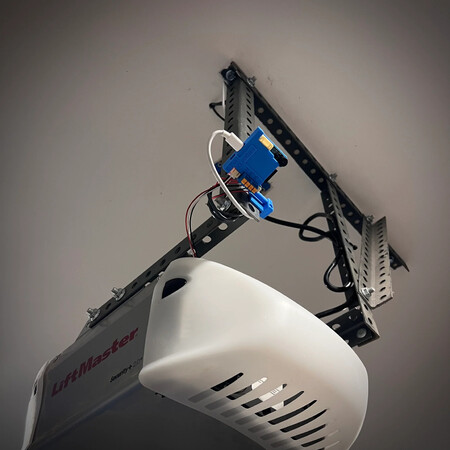
Paul Wieland is a restless computer scientist who wanted to control his garage door with his smartphone. While commercial options like the MyQ platform existed, his goal was to operate the door using home Wi-Fi without depending on MyQ’s servers or any other third-party services.
In 2022, he developed the first prototype of his solution, which he named RAGDO (Rage Against the Garage Door Opener). With RAGDO, users could effortlessly connect with home automation platforms like HomeKit or Home Assistant, all while avoiding the pitfalls of third-party server dependencies.
Why Relying on Third Parties Can Be Problematic
Wieland’s efforts coincided with a pivotal moment for users of the MyQ platform. The Chamberlain Group, which owns MyQ and boasts around 14 million users, abruptly cut off access to third-party integrations. Users who had once set up connections to automate their garage doors found that they no longer worked. This change was not only frustrating but also accompanied by the rollout of subscription services, further degrading the user experience.
The backlash was significant, with thousands of users expressing their discontent as they watched their hardware lose valuable features. Interestingly, during this tumult, sales for RAGDO surged, far exceeding Wieland’s expectations. From an initial goal of selling 100 devices, he found himself selling tens of thousands.
The Bigger Picture: A Shift in User Control
Wieland’s rise to prominence reflected a broader issue in the tech landscape. He noted in a New York Times article that companies often sell Internet-connected hardware with the intention of exploiting customer loyalty, modifying their products later to introduce forced subscriptions that complicate user control.
The Garage Door Industry: A Complex Web of Standards
Unfortunately, the garage door control market has evolved into a maze of proprietary solutions. Over decades, the original simple transmitter-receiver systems have transitioned to more complex technologies to prevent unauthorized access.
The industry has largely settled on “rolling codes,” which generate unique signals for each command. While these codes improve security, they also lead to numerous proprietary variants contributing to a closed ecosystem. This lack of interoperability means that garage door openers have become disproportionately expensive for consumers.
The Cloning Dilemma
While some universal remotes can clone existing controls, there are stringent limitations. For instance, some communities of homeowners require that codes be added directly from the switchboard, making independent cloning virtually impossible. Online discussions reveal a landscape rife with confusion and limited options, often leading consumers back to buying official remotes.
The Future of Garage Door Control
Despite the challenges, technological advancements continue to emerge. Alternatives, such as mobile application controls using Wi-Fi or BLE modules, are gradually gaining traction. Systems like MyQ have shown potential, yet industry inertia and regulatory barriers remain steep hurdles.
As new interconnection standards like Matter begin to gain adoption, there is hope for a future in which users regain control over their digital products, including their garage doors. Until then, many will remain dependent on a fragmented and often frustrating market.
Image | Dushawn Jovic
In Xataka | “Garage squatters”: there are people parking their cars every day in parking spaces that are not theirs.