
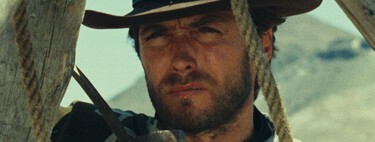
Clint Eastwood’s Perspective on American Art
For decades, Clint Eastwood has held the belief that the Western is one of the few authentic art forms that the United States can genuinely claim as its own. The fascinating irony lies in the fact that it was during his collaborations with Italian director Sergio Leone, notably in Almería, that the genre underwent substantial revitalization. Despite this, Eastwood remains unwavering in his conviction that few things embody the quintessential American spirit as much as the Western.
Original Art Forms in America
In recent remarks, Eastwood was quite candid: “Honestly, America is not like Europe. There aren’t many original art forms here. Most of them are derived from European art forms. Aside from Western, jazz or blues, that’s all that’s really original.” This statement, while seemingly critical, actually serves to highlight the uniquely North American identity of the Western—a genre that has evolved and been reshaped over time.
The Roots of American Art
Eastwood’s enumeration of art forms highlights three mainstays: Westerns, jazz, and blues. Each of these genres carries roots in deep-seated historical experiences. Blues emerged from the African American experience in the Deep South, while jazz, originating in New Orleans, is a fusion of African heritage and European musical traditions. The Western, in contrast, tells the story of a continuously shifting border, where European civilization clashes with indigenous cultures—each attempting to define its existence.
These three artistic forms encapsulate the tensions, conflicts, and cultural intermingling that characterize American society, firmly rooting them in the historical and philosophical fabric of a relatively young nation.
A Journey to Fame
Before his breakthrough in 1964, Eastwood was merely a moderately known television actor from the series ‘Rawhide.’ However, his casting in Sergio Leone’s ‘A Fistful of Dollars’ marked a turning point. This Italian-Spanish-German collaboration not only revived the Western genre but also catapulted Eastwood to international stardom, establishing his legacy as an iconic figure of film.
A New Breed of Hero
In this trilogy, Eastwood embodied a different kind of gunslinger—a character markedly distinct from John Ford or John Wayne’s heroic portrayals. The Nameless Man exemplified moral ambiguity, driven by money rather than a personal code of honor. This nuanced characterization aligned with the stark landscape of Almería, brimming with a rawness that challenged traditional Western narratives.
Eastwood’s Evolving Vision
Returning to the U.S., Eastwood adeptly modulated the Western genre to reflect a more profound dissection of its themes. Films like ‘Unforgiven’ and others confront the cyclical nature of violence without romanticizing it. Eastwood famously remarked, “Killing is not right and it is not romantic,” a statement that finally shifted the industry’s perception of the Western.
Acknowledge the Genre’s Legacy
‘Unforgiven,’ which won the Oscar for Best Film and Best Director in 1993, underscores the genre’s evolution. Before it, only ‘Cimarrón’ and ‘Dances with Wolves’ had achieved such recognition, demonstrating the long journey of self-exploration that the Western genre underwent, heavily influenced by European filmmakers and their visions.
In conclusion, Clint Eastwood’s insights on American art and its Western genre highlight a complex relationship between cultural identity and artistic expression, showcasing the unique narratives that emerge from a nation shaped by conflict and a rich tapestry of influences.