
Claudia Sheinbaum’s Call to Remember Electoral History
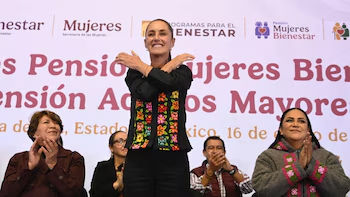
At a recent event in Tlalnepantla, Mexican President Claudia Sheinbaum urged young people to remember significant events in the nation’s political history, particularly instances of electoral fraud that have occurred in the past. This plea comes at a critical time as discussions around electoral reform are intensifying across the country.
Linking Historical Memory with Democracy
During her address, Sheinbaum articulated the importance of linking historical memory with the broader goals of democratic consolidation and the safeguarding of social rights. She emphasized that understanding past injustices is vital for appreciating the contemporary achievements within the framework of electoral reforms. Many young attendees, who were born in 2013, have not personally experienced the political turbulence associated with these episodes, prompting Sheinbaum to stress the relevance of this historical context.
The Legacy of Past Political Models
Sheinbaum reflected on a historical era where an economic and political model marginalized the majority of Mexicans. For 36 years, this model seemed to favor elites and neglect the wider populace. The current government, led by Andrés Manuel López Obrador, represents a shift away from this paradigm, signifying the beginning of a Fourth Transformation aimed at reversing these trends.
The Importance of Youth Engagement
Recognizing that young people represent the future of Mexico, Sheinbaum highlighted the necessity of educating them about the past challenges the nation has faced. She urged the youth to look back at historical events not only to appreciate current advancements but also to actively participate in safeguarding democracy. She posited that the ongoing changes brought about by her administration only make sense with a thorough understanding of the historical struggles that made them possible.
Social Programs as a Result of Mobilization
During her speech, Sheinbaum also supervised the distribution of social welfare programs, specifically the Women’s Wellness Pension and the Senior Adult Pension. She underscored that these programs are a direct result of social mobilization and reforms championed by her government. “Not every country in the world offers a universal pension for older adults,” she stated, emphasizing the need for recognition of the invaluable role that Mexican women play in family and societal structures.
Moving Toward Electoral Reforms
In addition to addressing historical context, Sheinbaum’s recent meetings with the Electoral Reform Commission and other political coordinators indicate a proactive approach to shaping future electoral frameworks. The administration’s push for reform seeks to enhance democratic participation and ensure fair electoral practices, thereby aiming to avoid the pitfalls of the past.
Conclusion
Claudia Sheinbaum’s call for young people to remember Mexico’s political history, particularly concerning electoral fraud and its implications for the current reform discussions, resonates deeply amidst the ongoing political discourse. By fostering a connection between history and present-day governance, Sheinbaum emphasizes the critical role of informed citizenry in shaping the future of Mexico’s democracy.