

Two years ago, Tesla was advancing at a dizzying pace. Their sales were growing, and they were putting all their machinery in motion to maintain an advantage over competitors. Their production process allowed them to manage profit margins so high that they could then push hard on the final price.
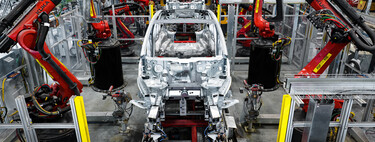
Part of Tesla’s secret was a machine called Giga Press. We were able to see it in their Berlin factory with our own eyes. Huge and imposing, this machine produces larger chassis parts more quickly, enabling Tesla to manufacture far faster than the competition—where similar parts consist of many smaller components that must be assembled.
The industry revolution triggered by Tesla has made major automakers determined to catch up. Recently, Tesla announced it could create even larger parts with an updated Giga Press, further reducing manufacturing times.
However, time has revealed that Tesla is facing challenges in evolving the Giga Press. Although it can produce at a high rate, it also experiences long pauses when modifications are necessary.
Large companies are focusing on speeding up development times. Chery long ago claimed that Chinese dominance in the automotive sector was inevitable. They assert that Europe has lost the battle, as their development cycles are much faster, responding to public demands at a frenetic pace.
Interestingly, various companies, including Japanese ones, have begun exploring mergers and partnerships to enhance their agility in auto development. For instance, Honda and Nissan looked into a merger to save Nissan from bankruptcy, aiming for efficient automotive development.
Faced with this rapid-paced environment, Toyota seems to be taking the opposite approach: embracing pause and perfectionism through the philosophy of kaizen.
Kaizen Philosophy: A Slow and Steady Approach
A prime example of the Chinese industry’s quickened pace is BYD, a company that aims to produce over five million vehicles yearly. In 2025, BYD announced it would incorporate advanced driving systems across all its models in China, including the budget-friendly BYD Seagull, priced under 10,000 euros.
This strategy has made many of their existing models seem obsolete, leading to stocks piling up in dealerships as customers wait for the latest advancements.
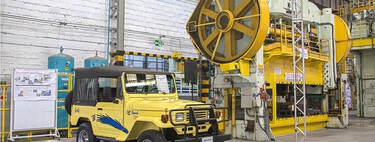
On the other hand, Toyota sits firmly entrenched in its kaizen philosophy, which emphasizes meticulous improvement and attention to detail. This methodology has historically placed Japanese automakers at the top of reliability rankings.
Chinese manufacturers reduce development times significantly, while Toyota opts for thoroughness.
The cultural differences are striking. While competitors race to develop products quickly, often applying fixes on the go, Japanese firms lean toward caution, ensuring that market offerings are of the highest quality possible.
Recently, Toyota expressed concern about their pace in tech advancements. According to reports, they plan to extend vehicle life cycles to nine years, focusing on software updates during this time. Previously, their model lifespan averaged between five to seven years.

This decision appears to be a reaction to the increasingly regulatory landscape. Toyota is among the few firms advocating that electric vehicles are not the only solution, asserting that diverse markets require various automotive solutions.
With a cautious approach, they navigate the shift to electrification. Following the disappointing launch of the Toyota bZ4X, the company seeks to boost sales through updates that improve performance and reliability.

The transition to electric vehicles presents a challenge for the company as it struggles to remain competitive against newer manufacturers like Tesla and BYD, which capitalize on materials that reduce costs in the absence of an internal combustion engine.
The stark difference in approaches—China with rapid releases and heavy software emphasis versus Toyota’s methodical updates—highlights the contrasting strategies in today’s automotive landscape. While Toyota aims to apply the kaizen philosophy to uphold reliability, the market is evolving at a pace that may force them to reconsider their approach.