
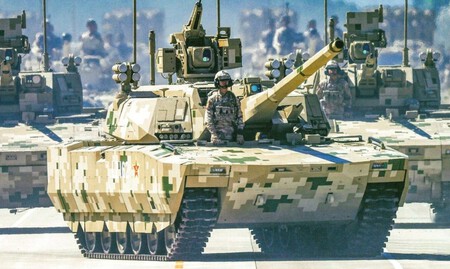
China’s Type 100 Hybrid Tank: A New Era in Armored Warfare
In August, China unveiled its revolutionary Type 100 hybrid tank and its accompanying support vehicles, the ZBD-100. Weighing just 40 tons, these armored units break from traditional heavy tank doctrines. The Type 100 combines rapid deployment capabilities with advanced electronic architectures, functioning as integral nodes within a hyperconnected combat ecosystem.
Advancements in Warfare Technology
The unveiling of the Type 100 is not the only development stirring concerns globally. Recently, China introduced its YKJ-1000 hypersonic missile, a weapon that highlights the shift in military strategy.
Redefining Combat Strategy
The Type 100 symbolizes a shift towards lighter, more versatile platforms. Equipped with robotic turrets and advanced optical and laser sensors, these vehicles boast superior situational awareness. This innovation prioritizes sensors, information, mobility, and active survival over traditional heavy armor.
The GL-6 active protection system exemplifies this philosophy, utilizing AESA radars that offer a 360-degree monitoring capability. In modern battlefields filled with drones and loitering munitions, speed and electronic response times have become the new benchmarks for effectiveness.
Type 100 Tank during a parade
Hypersonic Threat: The YKJ-1000
The new YKJ-1000 hypersonic missile, produced by Lingkong Tianxing, represents a significant shift in military dynamics within the Asia-Pacific. With a price tag equivalent to just 10% of conventional missiles, its mass production indicates a notable industrial evolution.
The missile is capable of reaching speeds between Mach 5 and 7, covering distances of up to 1,300 kilometers, effectively spanning the entirety of Japan from northern China. The missile’s autonomy-oriented design allows for detection, target selection, and evasive maneuvers mid-flight, making it a complex yet formidable weapon.
Strategic Implications
The deployment capabilities of the YKJ-1000 are alarming. Its ability to be transported within standard shipping containers means the missile can be rapidly mobilized, adding layers of strategic uncertainty in potential crisis scenarios. Notably, promotional videos released by China showcasing these missiles targeting Japan send a clear message amid escalating regional tensions.
Rising Tensions in East Asia
The timing of the YKJ-1000’s introduction is critical. With Japan’s military posture shifting under the leadership of Prime Minister Sanae Takaichi, warnings of military responses to potential threats in Taiwan have not gone unnoticed by Beijing. This escalation has led to retaliatory strategies, from diplomatic advisories to potential military preparations, as China views Japan’s stance as a direct challenge.
A New Arms Race
The combination of hypersonic missile technology and the innovative capabilities of the Type 100 tank suggests a coherent military doctrine focused on saturation, speed, and autonomous operations. This synergy poses a significant concern, as it allows China to potentially overwhelm adversarial defenses in conflicts involving Taiwan or Japan.
Conclusion
As tensions rise in East Asia, the integration of platforms like the Type 100 and YKJ-1000 indicates a shift not just in Chinese military capabilities, but in the entire strategic landscape of the region. This cocktail of advanced technology is reshaping how conflicts could unfold, placing pressure on nations like Japan and the United States to adapt swiftly to these emerging threats.
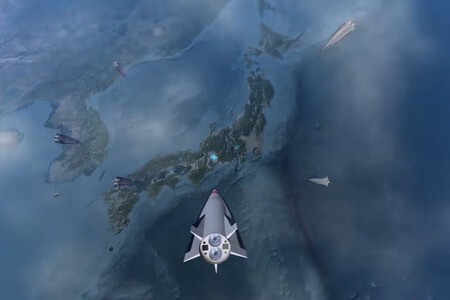
*Frame from the YKJ-1000 promotional video*
General News – 2