
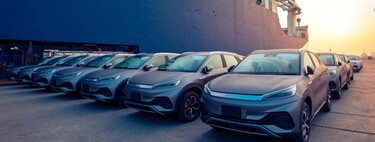
China’s Ambitious Roadmap for the Future of Electric Vehicles
As the European Union progresses towards a complete transition from combustion engines to electric vehicles (EVs), China is charting its path with an ambitious automobile roadmap. The China Society of Automotive Engineers (CSAE) has unveiled the Energy-Saving and New Energy Vehicle Technology Roadmap 3.0, a comprehensive plan that outlines the future of the automotive industry up to 2040.
Understanding “New Energy” Vehicles
The term “new energy” in China encompasses both electric vehicles (EVs) and plug-in hybrids. This strategy emphasizes reducing polluting emissions while simultaneously focusing on the automation of mobility. According to ChinaDaily, approximately 2,000 experts contributed over 18 months to create this roadmap, reflecting a significant commitment to revolutionizing the automotive sector.
Key Components of the Roadmap
The CSAE has designed the roadmap around a core principle known as the 1+5+26 concept:
- 1: A general strategy for establishing overarching goals.
- 5: Five technological groups to organize the relevant technologies.
- 26: Detailed research topics dedicated to each area.
Among the most notable targets in this roadmap includes:
Emission Reduction Goals: By 2028, the automotive industry’s emissions are expected to peak, followed by a targeted reduction of 60% by 2040.
Market Penetration of New Energy Vehicles: By 2040, it is projected that 85% of vehicles sold will be classified as “new energy,” with 80% being fully electric.
Combustion Engine Vehicles: Even in 2040, it’s expected that one-third of the vehicles sold will still rely on combustion engines, including hybrids and extended-range electric vehicles.
Hybrid Transition by 2035: All new passenger vehicles will be hybrids or better by 2035, with new energy vehicles likely to dominate sales starting in 2030.
Autonomous Driving Technology: An incremental introduction of cars equipped with Level 4 autonomous driving technology is planned, with Level 5 cars expected to operate under all conditions by 2040.
Industrial Adaptation and Technological Focus
Zhang Jinhu, the president of CSAE, emphasized that this roadmap differs significantly from previous iterations. Unlike past plans, which primarily concentrated on the technologies themselves, this roadmap stresses the production strategies needed to implement these technologies effectively. Manufacturers will not only need to adapt to lower emissions during the vehicle manufacturing process but also develop a robust network for connected technologies to support autonomous driving.
The overarching goal remains clear: achieving a future with zero accidents, zero victims, and enhanced efficiency. A systematic classification and methodology for emissions will be developed to ensure that by 2040, the pollution produced during manufacturing is reduced by 60% compared to levels in 2028. This will also help manufacturers lower costs through data interconnectivity and optimization of their production processes.
The Role of Solid-State Batteries
A significant focus of the roadmap is on the advancement of solid-state batteries. These batteries are expected to be crucial for the electric vehicle sector, promising a range of up to 1,000 kilometers and superior safety features. By 2030, solid-state technology is expected to be implemented on a limited scale within the industry, with more substantial production advancements anticipated by 2035.
The blueprint by CSAE builds upon two earlier roadmaps from 2016 and 2020. The initial 2016 plan involved 500 experts and outlined the 1+7 strategy, targeting various technologies, including energy-saving vehicles and smart connected vehicles. The follow-up in 2020 expanded to the 1+9 strategy, with the participation of 1,000 experts, enhancing objectives related to combustion engines and cleaner production.
Meeting Goals and Future Prospects
It is worth noting that China has already met many of its previous targets. For instance, in the 2020 roadmap, projections indicated 20% market share for new energy cars by 2025, but they are now on track to exceed 50% by that date.
As the automotive industry evolves globally, China’s roadmap reflects its ambition to establish itself as a leader in electric vehicle technology and production. The concerted effort encapsulated within this roadmap highlights the nation’s commitment to sustainability and innovation in mobility, setting a benchmark for other regions striving for similar advancements.
In conclusion, as manufacturers in China adapt to these ambitious targets, the country is poised to reshape not only its own automotive landscape but also potentially influence the global market dynamics of electric and autonomous vehicles. Through this comprehensive roadmap, China aims not just for leadership in technology but also for significant contributions to a more sustainable future in transportation.