
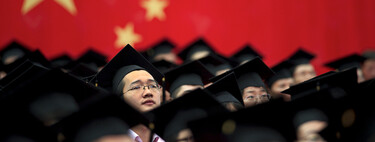
China has a plan to win the technological race, one that began more than 40 years ago when it decided to invest in training millions of engineers. We have seen it in the signings of the Meta superintelligence team, where the vast majority are Chinese. Chinese universities have a new plan to further accelerate the attainment of doctorates, one that puts aside theory to focus on practical application.
What is Happening?
China is implementing a groundbreaking policy affecting STEM students pursuing doctorates. The title PhD or ‘Doctor of Philosophy’ has traditionally required the development of a thesis. With this new initiative, led by Harbin University of Technology, students can now earn a PhD by creating tangible products and systems instead.
Case Study: Wei Lianfeng
The first student to achieve a PhD based on practical results was Wei Lianfeng last September. After graduating in 2008 and working for over a decade at the China Nuclear Institute, he returned to pursue his doctorate. His PhD was awarded for his innovative development of a vacuum laser welding system, evaluated by a court that included industry experts.
Why is This Important?
The training of technical talent has been a major priority for China for decades, and recently their efforts have intensified. In 2022, the government launched a program to promote STEM education, particularly in strategic fields such as semiconductors and quantum computing. A key aspect of this initiative is fostering close cooperation between companies and universities for joint training.
This shift emphasizes the recognition that theoretical knowledge alone is insufficient to compete in the technological arena, especially considering US blockades on key technologies. By streamlining the process of graduating higher-ranking engineers, China aims not only to increase the number of engineers but also to expedite their readiness for the real world, moving away from lengthy theses in favor of practical solutions.
STEM Power: A Long-Term Strategy
The push to nurture engineers and scientists is part of China’s long-term government plan that dates back to the post-Mao era. Focusing solely on doctorates, data from 2023 reveals that China awarded 51,000 PhDs in STEM fields, compared to 34,000 for the US. Projections indicate this figure could rise to 77,000 by 2025.
In terms of overall output, China has emerged as the world’s leading producer of STEM graduates, with a staggering 3.57 million in 2020—far surpassing India’s 2.55 million and the US’s 822,000. Currently, China boasts 5.8 million graduates, with estimates suggesting that more than 40% of all graduates choose a STEM career.
Image | Joshua Hoehne in Unsplash
In Xataka | Silicon Valley has a problem: its engineers are beginning to look to the other side of the Pacific, specifically towards China.