
China’s Lunar Ambitions: A New Era in Space Exploration
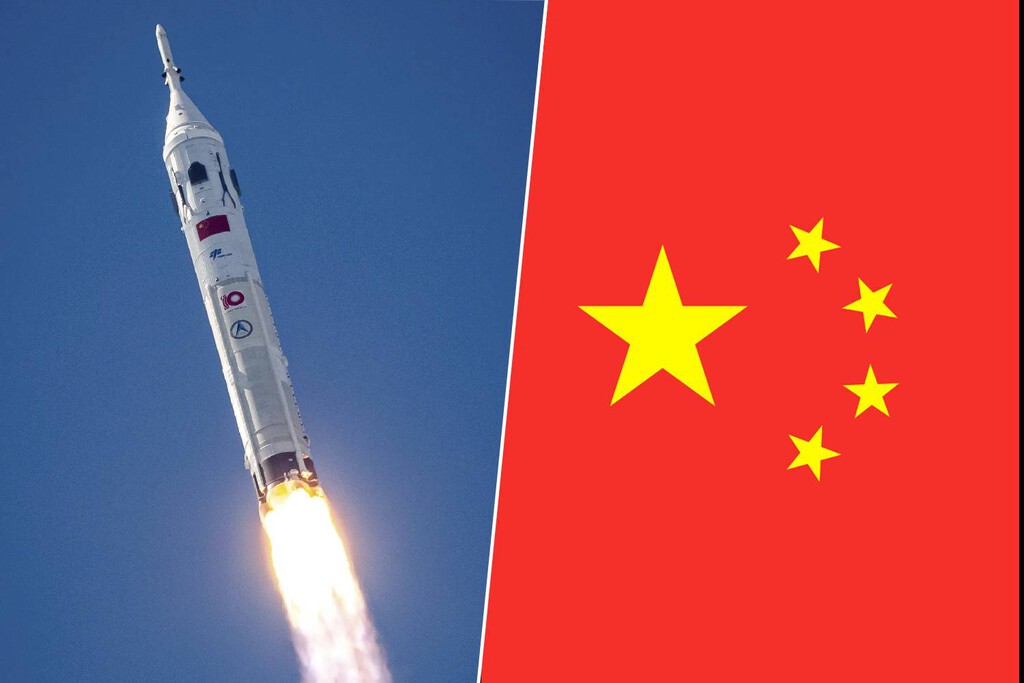
The race for humanity’s return to the Moon is entering a transformative phase, with China making significant strides. The recent success of the first “lit” flight of its next-generation heavy rocket, the Long March-10 (LM-10), marks a milestone in its lunar program. This test not only validated propulsion capabilities but also confirmed the safety measures for future crew launches in hostile environments.
Key Achievement at Wenchang Launch Pad
This breakthrough was achieved at the Wenchang launch pad in Hainan, introducing a technically verified pathway to meet China’s strategic goal of landing humans on the Moon by 2030. Unlike previous ground tests, this successful launch involved a real flight scenario that aimed to achieve maximum dynamic pressure (Max-Q).
Understanding the Significance of Max-Q
In aerospace engineering, Max-Q represents the peak aerodynamic forces acting on a vehicle. At this critical moment, an abort command was responsibly executed for the Mengzhou manned capsule, showcasing emergency protocols vital for crew safety.
In silence, China is making giant strides in a race that until now it was not leading: space.
Sophisticated Safety Measures
What sets this mission apart from prior efforts by other space-faring nations is the advanced safety protocols in place. The Mengzhou capsule successfully separated from the rocket and activated its escape engines, moving swiftly away from any danger zone. In a first for China, the initial stage of the LM-10 continued its ascent for a controlled descent into the sea, validating structural integrity under stress.
A Step Towards Reusability
This success not only signifies a monumental step towards lunar exploration but also highlights China’s commitment to a partially reusable launch system, akin to what companies like SpaceX are developing. These advancements are crucial in the context of the ongoing space race between China and the United States.
A New Framework for Manned Lunar Flights
The recent success at Wenchang is integral to a comprehensive structure known as the “Earth-Space Transportation System for Manned Lunar Flights.” This concept shifts from the traditional single-launch method to a two-launch and orbital rendezvous system. It consists of the Long March-10 rocket, the Mengzhou spacecraft, and a specialized lunar landing module called Lanyue.
Future Roadmap
The ambitious plan entails two distinct launches of the LM-10: one carrying the Lanyue module and the second transporting the crew aboard Mengzhou. The ultimate goal is for both vehicles to dock in lunar orbit prior to the crew’s descent to the Moon’s surface, presenting a streamlined approach to lunar exploration.
The Competitive Landscape
This evolving narrative is underpinned by a broader competition with the United States. While the U.S. leans on the power of the SLS Block 1 rocket, which is designed for maximum lift but is not reusable, China is adopting a more sustainable model with its modular Long March-10. As both nations push towards lunar exploration, the potential challenges each may face could alter the pace of their respective missions.
Conclusion
In essence, the race for the Moon is no longer a solo endeavor; it presents an arena for innovation, competition, and technological evolution. With its methodical roadmap leading up to 2030, China is well-positioned to make significant advancements in space exploration.