
The Return of an Iconic Hybrid
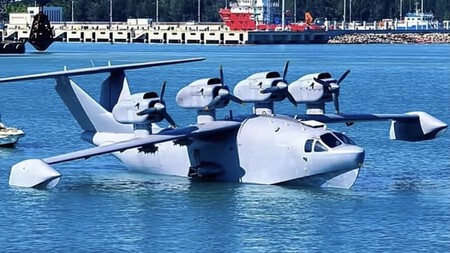
During the Cold War, American satellites captured images of an enormous Soviet craft in the Caspian Sea, so bizarre that CIA analysts doubted its authenticity. Dubbed the Caspian Sea Monster, this experimental vehicle became one of the most perplexing military projects of its time. Now, decades later, China is reviving this concept with its newly unveiled Bohai Sea Monster, a remarkable machine that merges the capabilities of a plane, ship, and missile launcher.
Ekranoplanes: A Historical Insight
Soviet ekranoplanes, like the Caspian Sea Monster, were prototypes that combined plane, ship, and missile launcher features, creating extraordinary hybrids unsuitable for simple classification. These colossal machines skimmed the sea’s surface at high speeds, utilizing the ground effect to elude radar detection. Although these constructs seemed improbable, they were once at the frontier of military innovation.
The Bohai Sea Monster: An Evolving Design
Recent images of the Bohai Sea Monster indicate that it is much more than a mere experimental vehicle. This craft is reportedly equipped with wing supports suitable for weaponry, potentially including torpedoes or anti-ship missiles. Its design emphasizes low-altitude operation over water, fundamentally altering the initial conception from an odd seaplane to a potential offensive platform.
Strategic Implications in the Pacific
China’s investment in ekranoplan technology makes strategic sense, particularly in potential conflicts within the Pacific. These vehicles could traverse archipelagos and coastal regions without relying on traditional airstrips. Their ability to operate just meters above the water partially hides them from radar, making them harder to detect than conventional aircraft.
Moreover, the Bohai Sea Monster could transport troops, supplies, or weaponry in areas where ships are at risk and aircraft require infrastructural support. This functionality positions the craft as a vital logistics tool in a region fraught with territorial disputes and military tensions.
Lessons from the Soviet Era
The design and purpose of the Bohai Sea Monster draw significant parallels to Soviet ekranoplanes, particularly the Mon-class, which carried anti-ship missiles and served as high-speed naval attack platforms. Although these old Soviet crafts faced challenges concerning maintenance and vulnerability, advancements in technology now offer better materials, sensors, and navigation systems that could resurrect the concept into a practical military solution.
More Than Just a Prototype
Analysts speculate that the current model of the Bohai Sea Monster serves as a technology demonstration rather than the final product. Future iterations may feature greater size, enhanced engines, and increased military capabilities. This aligns with China’s typical strategy of introducing prototypes that evolve into fully operational systems over time.
A Broader Military Strategy
The emergence of the Bohai Sea Monster fits into a larger transformation within the Chinese military landscape. Beijing aims to develop platforms that blur traditional distinctions between ships, planes, missiles, and drones. This integration of capabilities is pivotal for saturating the Pacific with systems that are agile, difficult to detect, and multifunctional.
In conclusion, the Bohai Sea Monster is not merely a revival of Cold War technology; it represents China’s ambition to adapt and evolve military concepts into viable strategies for modern warfare. As the conflict landscape shifts, so too does the machinery of warfare, reflecting a new era of military innovation.