
China’s STEM Revolution: Leading the Global Charge in Engineering and AI Talent
For decades, China has been renowned as the great factory of the world , yet simultaneously, the nation has embarked on a quieter revolution in STEM education (science, technology, engineering, and mathematics). Each year, China produces a staggering 3.5 million new engineering graduates , and among them, a new elite is emerging: AI engineers . This transformation is not merely coincidental, but rather the result of deliberate policy choices rooted in long-term planning.
A Long-Term Vision
The roots of this educational transformation can be traced back to the post-Mao era. Following Deng Xiaoping’s rise to power, China initiated a series of reforms known as the “ Four Modernizations ,” which emphasized the revitalization of education with a particular focus on science and technology . In 1988, Deng urged that “science and technology are the main productive forces,” setting the stage for a significant change in the country’s educational trajectory.
The “Hai Gui” Phenomenon
In the mid-1980s, China began sending students abroad to prestigious Western universities . This initiative aimed to cultivate skills in fields such as engineering, physics, and mathematics. Upon their return, these scholars, known as ” Hai Gui ” or sea turtles, significantly influenced the academic landscape, inspiring subsequent generations and enhancing the quality of education within Chinese institutions.
Elite Universities Shaping the Future
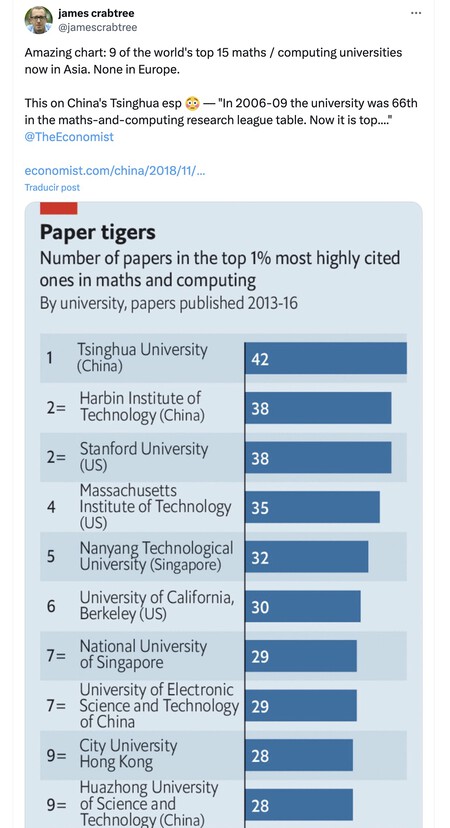
One of the most notable institutions is Tsinghua University , which ranked as the top university for impactful scientific studies between 2013 and 2016, surpassing renowned American universities like Stanford and MIT. According to Yang Bin , vice president of Tsinghua, the return of the “Hai Gui” scholars significantly raised academic standards and transformed the educational landscape.
Investments in Education
China’s long-term strategies are evident in its remarkable output: 3.57 million STEM graduates each year, compared to only 820,000 in the US . Educational expenditure has consistently remained above 4% of GDP for the last two decades, with attractive incentives for publishing quality research. Scholars can earn around $100,000 for studies published in internationally recognized journals, presenting a lucrative opportunity for academic excellence.
A Focus on Artificial Intelligence
With the rise of AI, the Chinese government has made substantial investments in education, ramping up its budget from 2.2 billion yuan to 4.85 billion yuan between 2012 and 2022. Several elite universities are now prioritizing AI in their curricula, emphasizing the strategic importance of this field for national development.
Long-Term Educational Projects
Since 1995, the Chinese government has initiated various projects to overhaul the educational system. The Project 211 aimed to prepare around 100 universities for the 21st century , which later evolved into the “Double First-Class Construction” under Xi Jinping, focusing on enhancing technical certification and training within universities.
AI Superstars Emerge
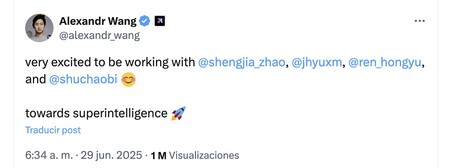
Notably, prominent AI engineers like Shengjia Zhao , Hongyu Ren , Jiahui Yu , and Shuchao Bi exemplify the results of this educational reform. Their expertise has attracted the attention of major tech companies like OpenAI, where they have made substantial contributions to AI advancements.
Talent Acquisition in Major Tech Firms
Recent reports confirm that prominent tech companies, including *Meta*, have been aggressively recruiting talent from China, recognizing the exceptional skills of Chinese engineers . A leaked internal memo from Mark Zuckerberg highlighted that the new AI division would be bolstered by several engineers from OpenAI, demonstrating the competitive advantage that Chinese-trained talent offers in the tech space.
The Brilliance Behind AI Models
- Jiahui Yu: Co-Creator of O3, O4-MINI, GPT-4.1.
- Shengjia Zhao: Co-Creator of ChatGPT and GPT-4.
- Shuchao Bi: Co-Creator of GPT-4O.
- Hongyu Ren: Developed multiple versions of the GPT model.
Interestingly, all four engineers trained at top Chinese technical universities before pursuing advanced studies in the United States, highlighting the high-caliber education that has proliferated in China.
China’s Influence on Global Engineering
As the largest producer of STEM graduates globally , China plays an essential role in engineering and technology sectors worldwide. Remarkably, Chinese students constitute 20% of all foreign students studying in the US, showcasing China’s significant contribution to global education.
AI Expertise Dominating the Analyst Sphere
According to a recent report, 38% of AI experts currently employed in the US have trained in Chinese universities, surpassing the number of those trained in the US. This statistic emphasizes that China is not only producing engineers but is a powerhouse of AI talent that is increasingly shaping technological advancements.
Corporate Interest in Chinese Talent
Companies like Nvidia are fully aware of the value that Chinese talent brings. Recently, they hired Banghua Zhu and Jiantao Jiao , further indicating that the demand for skilled engineers from China continues to rise.
As the landscape of AI evolves, the US faces potential challenges if visa restrictions for Chinese students are implemented. Such actions could inadvertently weaken America’s AI industry, particularly as many leading talents hail from China. Maintaining a healthy exchange of knowledge and innovation is crucial for the technological advancements that shape our future.