
The Rise of Photovoltaic Oases in Deserts
The world is transforming deserts into photovoltaic oases . As global demands for clean energy rise, countries are ramping up efforts to meet ambitious decarbonization goals. With a focus on large-scale solar farms, countries like China are leading the charge, often outpacing the human workforce needed to develop these projects rapidly.
In response, robotics has entered the solar energy landscape with incredible innovations . One breakthrough is the automated system that can install up to 1,000 panels per day —a game changer for solar farm deployment.
Introducing Saturn: A Robot Revolution
Meet Saturn , developed by Sunpure , a company specializing in robotic innovations within the photovoltaic sector. We’ve previously explored how clean solar panels are crucial for maximizing energy production. Saturn is not just any robot; it features a head designed to elevate pallets of solar panels along with an arm tailor-made for seamlessly placing those panels onto rails.
Recently presented in a demo, Saturn uses advanced technology to determine the optimal positioning of each panel in under five seconds . With an impressive accuracy of five millimeters , its four-meter arm allows it to work with both large and extra-large panel structures.
With an autonomy of 72 hours , Saturn boasts an efficiency estimated to be three to four times that of human workers, capable of installing between 600 and 1,000 solar panels daily . Early adopters of this technology report that observing Saturn in action is nothing short of mesmerizing.
Integrating Robotics in Solar Farms
This integration of robotics into solar energy is not entirely new; for instance, Spain has its share of robotic systems that monitor agricultural environments. Yet, they too are embracing technologies similar to Saturn’s. In the United States, another robotic installation, named Máximo , is making waves by lifting and installing panels weighing up to 40 kilos in trial fields. Its creators assert that such innovations are pivotal for the future of global energy.
In the U.S., an astonishing 15,000 solar modules are being installed every hour, equating to a hefty 225,000 tons . The aim is to elevate this number to 50,000 panels per hour by 2035 . However, a significant issue remains: a labor shortage complicates the expansion of renewable energy sources.
Challenges and Opportunities in the Workforce
While demand for renewable energy surges, many solar energy companies in the U.S. report challenges in finding qualified personnel for solar farm installations. A staggering 90% of these companies admit to facing difficulties in recruitment—a statistic that highlights the need for robots in the field.
With machines that can operate autonomously for several days using advanced sensors—which allow them to work in various lighting conditions and are resistant to water and dust—human workers are increasingly relegated to supervisory roles. They are there primarily to ensure that these robotic systems execute their tasks accurately.
China’s Dominance in Renewable Energy
China’s focus on automation and robotic integration in solar panel installation showcases its strategic aims of solidifying its position as a global leader in the renewable energy market. The nation has demonstrated a substantial commitment to green energy , investing over $625 billion in clean energy solutions in 2024 alone—three times what was invested before. This investment now accounts for 10% of China’s GDP .
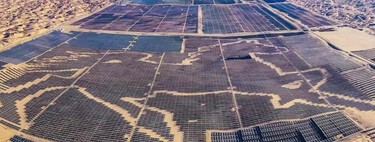
Moreover, this trend has significant implications: about 90% of global polysilicon production , 80% of lithium batteries, and 70% of rare earth magnets—essential components for both renewable energy and electric vehicles—are produced in China. This robust industrial infrastructure allows the country to set lower technology prices and maintain its status as a significant energy supplier globally.
The outcome of these advancements is evident; China’s dominance translates into lower production costs, compelling other nations to purchase rather than compete, leading to a peculiar but potent global energy dynamic . As technology advances and renewable energy becomes more vital, the balance of power in the energy sector continues to shift dramatically.