
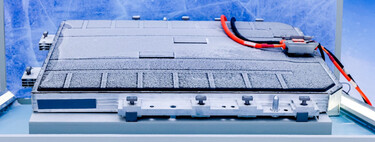
The Future of Battery Technology: A Breakthrough in Sodium Metal Batteries
Imagine connecting your smartphone to a charger and watching it charge from 0 to 100% in the time it takes to brew a cup of coffee. This dream has come closer to reality thanks to a collaborative effort from researchers at Southeast University, HiNa Battery Technology, and Yangzhou University in China. Their innovative work on a new quasi-solid electrolyte (QSE) specifically designed for sodium metal batteries promises ultra-fast charging without compromising battery life.
Game-Changing Developments
As reported in Nano-Micro Letters, this team achieved impressive results: they facilitated charging times of just four minutes, matching a high-speed rate of 15C, with the battery retaining 90% of its capacity after enduring 2,000 rapid charging and discharging cycles at a rate of 3C. This revolutionizes the landscape where sodium is now positioned as a viable competitor to lithium.
The Advantage of Sodium
One of the most compelling factors for sodium batteries is their cost-effectiveness and abundance. Sodium is significantly cheaper and more plentiful than lithium, potentially solving issues related to supply chain bottlenecks and unpredictable pricing in the battery market. Historically, however, sodium has faced challenges with slower ion transport and unstable interfaces that compromised battery life. This new electrolyte technology promises stability for up to 6,000 continuous hours, signaling a breakthrough for both electric vehicles and consumer electronics.
Understanding the Science
The innovative approach, termed “dual intertwined mediator engineering,” involves a complete redesign of the pathways through which sodium ions travel in the battery. Traditional electrolytes see sodium moving sluggishly with a transport efficiency of 0.4 to 0.7. In contrast, the new Sn-FB QSE electrolyte achieves an outstanding index of 0.94, facilitating what is known as “single-ion conduction.” This allows sodium ions to travel freely and directly, eliminating the limitations posed by conventional electrolytes.
- The Releaser (DFOB⁻ Salt): By weakening the coordination between sodium ions and the polymer network, this salt significantly enhances ion mobility—up to six times faster than in traditional liquid electrolytes.
- The Builder Shield (Sn²⁺ ions): This ion forms a protective layer at the anode, ensuring sodium deposits evenly, mitigating the risk of dendrite formation that often leads to short circuits.
This dual mechanism not only enhances battery performance but also boosts safety and longevity through the creation of robust protective layers at both the anode and cathode.
From Lab to Real-World Application
What makes this breakthrough even more exciting is its potential for scalability. Researchers have successfully developed flexible, pressure-free “pouch cells.” In demonstrations, these batteries were capable of charging smartphones while being bent and handled, showcasing their practical utility.
The new electrolyte maintains stability up to 4.7 volts, allowing compatibility with advanced materials, further enhancing performance while aligning with existing manufacturing methods. There’s also the potential for extending this technology to lithium and potassium batteries.
Looking Ahead
Charging a mobile phone in four minutes while preserving battery health is a long-cherished goal in consumer electronics. The emergence of innovations like the quasi-solid electrolyte presents sodium not just as a low-cost alternative, but as a high-performance contender in battery technology.
Although commercial availability may still be on the horizon, this discovery signals a pivotal shift away from an exclusive reliance on lithium. The day when you can plug in your smartphone and enjoy all-day battery life is inching closer to becoming a reality.