
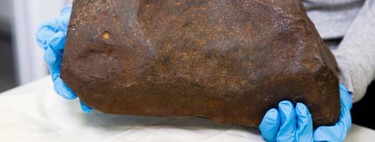
So far, 11 unique minerals have been discovered on the Moon, with the latest addition unveiled by a team of Chinese scientists analyzing a lunar meteorite. This discovery not only enriches our understanding of the Moon’s geology but also opens avenues for innovative applications on Earth.
From the Moon to Your Light Bulbs
The newly identified mineral is known as cerium-magnesium changesite. It features a glassy, transparent, and brittle appearance, with granules measuring between 3 to 25 micrometers—thinner than a human hair. What sets this mineral apart is its remarkable fluorescence, a quality that could potentially enhance LED technology significantly.
A Necessary Color Change
Unlike traditional incandescent bulbs that generate light through heat, LED bulbs utilize semiconductor materials to harness electricity efficiently. By allowing electrons to flow from one layer to another, energy is released as light when electrons fill “holes” left by missing electrons.
The initial light produced in this process is blue. However, to achieve the white light commonly associated with LEDs, manufacturers coat the bluish chip with a fluorescent material that absorbs some blue light and emits yellow light, blending both to create white light.
The More Fluorescence, the Better
The fluorescence of the lunar mineral is so intense that it could serve as a highly effective complement for LED bulbs. This means white light could be generated more efficiently, leading to enhanced energy savings and potentially revolutionizing how we light our homes and public spaces.
More Achievements for China
China’s burgeoning expertise in lunar geology is commendable, particularly through its Chang’e missions. The previously discovered Changesite-(Y) phosphate on Chang’e-5 is directly related to this new mineral, showcasing China’s commitment to lunar exploration.
For Now, We Can Only Dream
While the prospect of mining the Moon for minerals is enticing, practicality renders it currently unfeasible. We must consider whether lunar resources are plentiful enough and what implications excavating them may have. Consequently, the applications of lunar minerals in terrestrial technology remain largely theoretical for now.
What These Minerals Teach Us
Studying lunar geology offers invaluable insights into the history of both the Moon and Earth. If we find minerals on the Moon that are also present on Earth, it may suggest that similar geological conditions existed on both celestial bodies. Conversely, if unknown minerals are discovered, this could indicate unique conditions on the Moon that did not occur on Earth.
In essence, this ongoing examination helps us understand our origins and the evolutionary paths both Earth and the Moon have taken. Instead of focusing solely on exploiting lunar resources, we should prioritize learning from them to maintain the balance of our own planet’s ecosystem.