
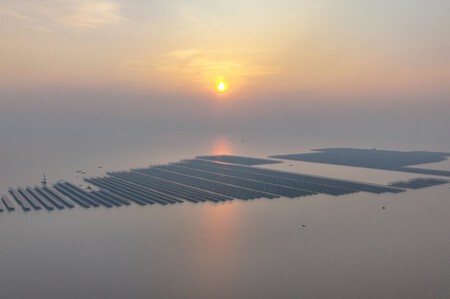
China is making headlines in renewable energy once again, constructing power plants at an unprecedented pace. In just the last four years, the country has matched the total electrical output of the United States, demonstrating an aggressive commitment to solar energy. In 2023 alone, China installed more solar panels than the U.S. has in its entire history, showcasing its remarkable growth in this sector.
Creating Space for Solar Energy
As solar energy installations continue to expand, the need for space becomes critical. In response, China is exploring various terrains—from the Tibetan plateau to the expansive open sea. One remarkable project, set to be connected to the national electrical grid by the end of 2025, is a record-breaking mega solar plant located offshore.
The Largest Offshore Solar Plant in the World
This extensive solar facility is situated off the coast of Kenli district in Dongying city, Shandong province. Developed by China Energy Investment Corporation (CHN Energy), the plant boasts a nominal capacity of 1 GW. As reported by People’s Daily, it represents China’s first gigawatt-level offshore photovoltaic project and stands as the largest of its kind globally.
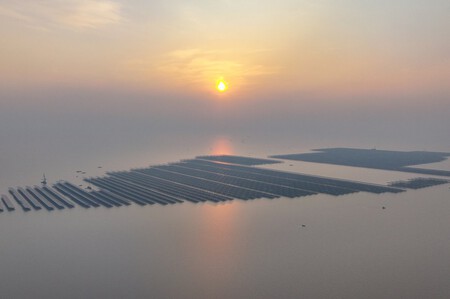
This is what the Shandong plant looks like. Via: People’s Daily
Why Build at Sea?
Land near China’s major coastal cities is at a premium, making it increasingly challenging to find space for solar energy facilities. The Chinese government’s red lines protect agricultural land, while the bulk of solar and wind resources resides in the western regions, far from populous cities. Consequently, building offshore becomes a strategic solution. Although floating solar technology has been limited to calmer waters, this project aims to tackle the challenges posed by the open sea, including salt corrosion and severe weather conditions.
The Importance of Local Energy Production
China’s coastal provinces, such as Shandong and Jiangsu, are significant industrial hubs. By generating energy directly at these sites, the country can circumvent the costly and inefficient transport of electricity over long distances from desert regions like the Gobi. If this offshore project succeeds within its design parameters while keeping maintenance costs low, it could greatly enhance the shift from fossil fuels to renewable energy.
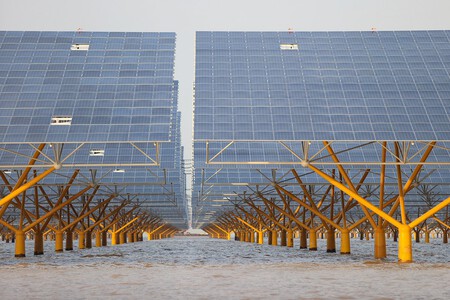
The panels are simply colossal. Via: X from People’s Daily
A Marvel of Engineering
The plant encompasses over 1,200 hectares, hosting 2,934 massive photovoltaic panels, each measuring 60 meters long and 35 meters wide. Unlike traditional floating setups, this infrastructure is engineered to endure extreme sea conditions, including storms and frigid waters.
Moreover, the plant’s innovative design integrates aquaculture underneath the solar panels, allowing for fish farming while generating energy above. Similar to other integration models across China, such as agrivoltaics in Guizhou province, the Shandong project can optimize resource usage effectively.
Significant Environmental Impact
With an installed capacity of 1 gigawatt—equivalent to that of a modern nuclear reactor—this solar plant is expected to produce approximately 1.78 billion kWh of energy annually. This output could potentially power 2.6 million homes in the vicinity, covering around 60% of the local demand. It is estimated that implementing such a facility will eliminate around 1.3 million tons of carbon dioxide emissions each year, marking a meaningful step in combating climate change.