
Recently, Porsche released its quarterly results, and the figures are alarming. As Halloween approaches, the numbers are nothing short of terrifying . The company reported hundreds of millions in losses, a significant drop in margins per unit sold, and an overwhelming sense that it is caught in a vice between the pressures of Europe and China . In particular, the latter has been setting a rapid pace that finds Porsche struggling to keep up.
The Numbers
To give a quick overview, Porsche’s latest performance metrics read like a horror story. Here are some key statistics from their Q3 results:
- Losses in the last quarter: €967 million.
- Last year in the same quarter: €974 million profit.
- Profit in the first nine months of this year: €40 million.
- Last year in the same period: €4 billion profit.
- Operating margin has nearly disappeared .
- Projected losses by the end of the year: €1.8 billion.
A Perfect Storm
Porsche finds itself in the middle of a perfect storm . Recently, the company had seemed well-prepared for the challenges ahead. However, it now appears that things are rapidly spiraling out of control, like being caught in a downpour with a flimsy umbrella and a leaking raincoat.
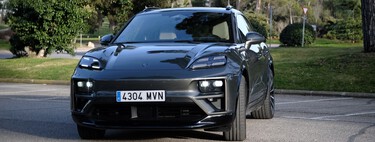
Encouraged by sales in China and European regulations driving a shift to electric vehicles, Porsche announced an ambitious plan to electrify its fleet. The Porsche Taycan was well-received, and the electric Macan was expected to be its first major “mass” electric vehicle. Plans were also underway for an electric Porsche Cayenne .
Late to the Party
Unfortunately, the electric Macan arrived too late. During this time, the United States imposed high tariffs, creating significant financial strain. European institutions are pushing for a swifter transition to electric vehicles, yet consumer adoption isn’t keeping up with these aspirations. Many affluent buyers appear satisfied with the electric vehicles they have already purchased, while the Chinese market is evolving rapidly.
Impact on the Chinese Market
The shift in the Chinese market has significantly disrupted Porsche’s outlook. For the Chinese consumer, Porsche no longer represents the pinnacle of luxury and technology ; it’s simply another brand among many. The company, much like its competitors within the Volkswagen Group, has struggled to adapt to this evolving reality.
In fact, Porsche’s sales in China have plummeted. In the first nine months of the year, the company reported a 26% drop in sales compared to the same period in 2024. The 32,195 cars sold in China during Q3 2025 starkly contrasts with the 64,237 sold during the record year of Q3 2019.
Increasing Competition
In the last five years, declining sales have become a continuous trend, worsening significantly over the last two years. The Chinese market is experiencing an explosion of electric vehicles that are faster, more modern, and often come equipped with innovations that outpace those offered by European brands.
Reacting Too Slowly
The delay of the electric Macan is particularly damaging, considering how rapidly the industry is evolving in China. To mitigate skepticism and engage traditional customers, Porsche recently introduced a wireless charging system and a fully digital environment for the Cayenne. However, these features have been available in Chinese vehicles like the Hongqi E-HS9 for years without gaining relevancy among consumers.
Moreover, features like ubiquitous screens have lost their novelty, while Chinese buyers are increasingly demanding advanced software solutions and integration with services like mobile ecosystems. Even fast charging capabilities, while impressive in Europe, lag behind what is offered by competitors in China, such as the 1,000 kW charging available from BYD.
The Need for Adaptation
Companies like BMW have similarly struggled, straying from established timelines for product releases. The speed at which Chinese firms can adapt and bring technologies to market has become an essential factor in their competitive advantage.
The consequences of this rapid development in the automotive sector extend worldwide, affecting how European manufacturers strategize and building an urgency to expedite production. Many companies have started modifying their vehicles in real-time to better suit local tastes.
Porsche faces a dire need for swift and decisive adaptation to maintain its status in the electric vehicle market. Whether it can navigate through its current challenges remains to be seen. The company must realign its strategy both in Europe and China, ensuring that it aligns with the rapidly changing consumer demands and technological advancements.