
Europe’s Tariff Conundrum: The Clash with Chinese Electric Car Manufacturers
In the shifting landscape of the global automotive industry, Europe is finding itself at a crossroads with China over the rising dominance of electric vehicles (EVs). Recently, European authorities have introduced tariffs on Chinese electric cars, aiming to encourage local investment. The European Commission has made it clear that if Chinese manufacturers want to thrive in Europe, they must engage in meaningful investments on the continent to sell their vehicles at competitive prices.
The Chery Dilemma: Spain’s Entry into the European Market
The Chinese automotive giant, Chery , initially viewed Spain as its gateway into the European market. However, the European Commission has deemed this strategy insufficient. Stéphane Séjourné, the Executive Vice President of the European Commission for Prosperity and Industrial Strategy , has criticized Chery’s business model, stating that its current methods place relations between China and Europe in an uncertain position.
Understanding the Direct Knock Down Model
At the heart of the critique is the production model employed by Chery at its Barcelona facility. The factory currently engages in Direct Knock Down (DKD) processes. Essentially, vehicles arrive in semi-assembled containers from China, where only the final touches are completed—an effort akin to piecing together a puzzle . The assembly process, therefore, lacks depth and raises concerns over quality and local economic impact.
One significant aspect of this assembly method is that vehicles originating from Spain do not even undergo painting at the facility. As it stands, the plan is to progress to a Complete Knock Down (CKD) approach, where raw components are shipped unassembled, allowing for more extensive local production in the future.
The Ebro Model: A Name with Little Local Heritage
The models produced under this framework—dubbed the Ebro —may carry a name that evokes Spanish roots, but they are fundamentally Chinese products. Séjourné has expressed concerns over the implications of such practices. He emphasized that a factory operating outside of Barcelona, solely assembling vehicles from Chinese parts, creates low-quality jobs and does not contribute meaningful value to the European automotive sector.
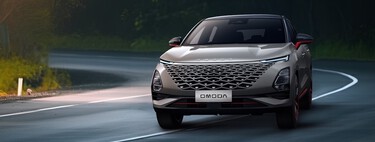
<img alt="Omoda and Jaecoo, betting on electric vehicles" width="375" height="142" src="https://i.blogs.es/6e4f14/358082912_211679268503893_6334103546868675620_n/375_142.jpeg"/>The Challenge with Tariffs and Market Penetration
Chery has faced stringent tariffs for its electric models, notably the Omoda 5 . At present, Chinese electric cars have a punitive tariff rate of 21% , which compounds the standard 10% tariff imposed on all vehicles coming from China. This regulatory environment significantly complicates Chery’s ability to enter the Catalan market freely and without penalties. Their combustion-engine models, however, continue to enter Spain without such tariffs.
A Negotiation Stalemate
According to Séjourné, negotiations between Europe and China seem to be at a standstill. While Europe had previously imposed tariffs on electric cars, it extended a hand by allowing hybrid and combustion engine vehicles to enter the market tariff-free. This was initially perceived as a pathway to negotiations. Despite the existing challenges, Chinese brands like Chery have managed to capitalize on this opening, achieving over 19,800 units sold within the first eight months of the year with only six models in circulation. This statistic underscores the significance of their presence in Spain , where price sensitivity drives consumer behavior.
<img alt="Shawn Xu discussing the future of Omoda and Jaecoo in Europe" width="375" height="142" src="https://i.blogs.es/ea0226/1757322101270/375_142.jpeg"/>The Bigger Picture: Future Investments and Industry Transformation
As discussions continue about tariff structures and market access, the European Commission’s vision is clear: Chinese manufacturers must invest in local operations to sidestep tariffs and bolster European industry. These investments must be substantive—transforming the mere assembly of vehicles into a more integrated local industry that includes the manufacturing of components and parts.
This approach by Chinese automakers is not exclusive to Europe ; similar strategies can be observed in Thailand . Economically, it mirrors tactics employed by European manufacturers in countries like Algeria where tariffs are in place, prompting local production and investment demands. Thus, as the automotive landscape evolves, the imperative for manufacturers—whether Chinese or European—to localize production becomes increasingly pronounced.
In summary, the ongoing tensions between Europe and China highlight the complexities of modern automotive economics. As the battle over EV supremacy escalates, both sides must navigate intricate strategies that blend trade and investment in a way that fosters global cooperation.