
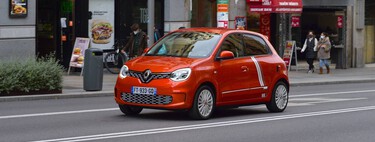
Europe has embarked on a journey towards electric vehicles (EVs), aiming to fully transition away from combustion engines by the year 2035 . Whether this ambitious goal will be achieved smoothly or face setbacks is yet to be seen. Currently, the regulations are clear; cars with internal combustion engines will no longer be sold unless they are carbon-neutral by 2035. Before reaching that milestone, several crucial targets must be met in 2027 and 2030 .
The initial requirement mandates that automakers must account for their emissions within two years. By the end of 2027, companies are expected to present proof that the average emissions of their vehicle fleet, sold between 2025 and 2027 , do not exceed 93.6 grams/km of CO2 . By 2030 , this figure is set to halve , suggesting that significant electrification of sales is necessary.
To achieve these goals, manufacturers can still include vehicles that emit below this threshold. This strategy emphasizes the need for a substantial economic investment and meticulous planning. Transitioning to electric vehicles typically incurs higher costs, thereby squeezing profit margins in a highly competitive market.
The most effective solution? Create a vehicle with passion and innovation .
Renault Clio Technical Specifications
Renault Clio | |
|---|---|
Body Type | Five-seater utility |
Dimensions and Weight | 4,116 mm long, 1,768 mm wide, 1,451 mm high, 2,591 mm wheelbase. Weight starts from 1,155 kg (varies by version). |
Trunk Capacity | Up to 391 liters (depending on motorization) |
Maximum Power | 160 hp |
WLTP Consumption | Hybrid: 3.9 l/100 km; Gasoline: 5 l/100 km; LPG: 6.9 l/100 km. |
Environmental Badge | Zero emissions |
Driving Aids (ADAS) | Includes up to 29 ADAS driving aids, meeting EU minimums, such as adaptive cruise control. |
Other Features | Open R LINK infotainment system on Android Auto with Google Assistant, Google Maps, and Google Play access. Comes with a 2 GB data package for two years. |
Electric Hybrid | Yes. |
Plug-in Hybrid | No. |
Electric | No. |
Price and Launch | Date and price to be confirmed. |
Much Care and Attention
“When we designed this car, we embraced risk, knowing that if it was caught too early, the project might be canceled,” said Paula Fabregat, Head of Design for Renault’s A and B segments. Her words reflect the passion involved in redesigning the Clio, an icon for the brand.
Surprisingly, the new Clio does not resemble its predecessors. At first glance, the design appears to be completely different—which could be either a positive or a negative. Featuring a baroque front with intricate edges, the Clio utilizes a complex side curve not often seen in its price range, culminating in a striking rear that draws the eye.
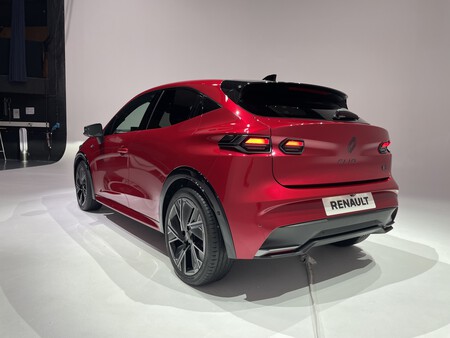
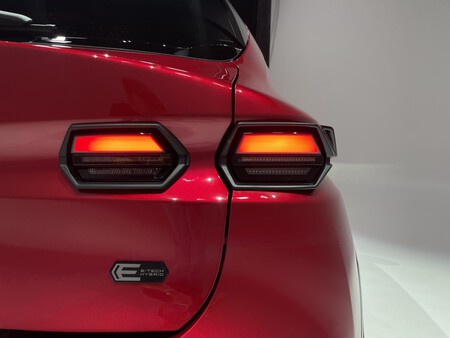
The innovative design is commendable. The front may not appeal universally, but the risky rear with distinctive optical groups resonates with the aesthetic of supercars. While opinions on its beauty may vary, the new Clio certainly makes an impression and is even more striking in person.
However, the competition for the Clio has become fierce. The traditional market for budget-friendly small cars is shrinking as the average price for models like the Seat Ibiza and Hyundai i20 hovers around €20,000 . The pricing for the latest Clio is still unconfirmed, but expectations suggest it will not be cheap.
Renault is taking bold steps to differentiate itself. Unable to compete solely on price due to technical obligations and safety regulations, the brand aims to win over customers through the quality and design of its offerings.
The commitment to thoughtful design extends to the interior, featuring a 10-inch instrument display and an infotainment system based on Android Auto with services like Google Assistant and Google Maps. Additionally, the vehicle includes a 2 GB data plan valid for two years. The interior also shows attention to detail with textured finishes and comfortable seating.
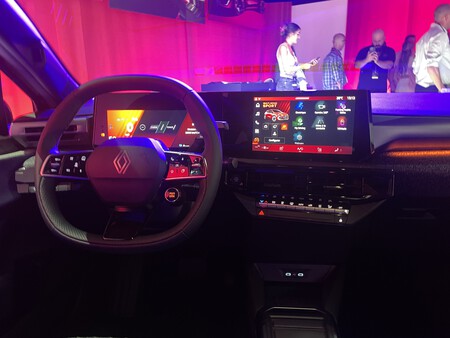
The Alpine finish adds an extra layer of appeal with matching blue accents and bold design choices, showcasing Renault’s commitment to taking risks. The challenge for Renault lies in delivering a compelling engine option that justifies a higher price for a “small car.” The vehicle will offer a 120 hp LPG option and a 115 hp gasoline engine, with both manual and automatic transmission choices.
However, the star of the lineup is the Full Hybrid e-Tech engine. This 1.8-liter four-cylinder gas engine paired with a significant battery aims to keep consumption and emissions low, boasting 160 hp while achieving a remarkable consumption rate of just 3.8 liters per 100 km and emissions of 89 grams/km of CO2 , according to WLTP standards.
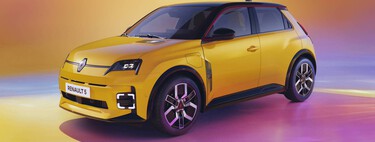
To give you context, its un-electrified counterpart emits 114 grams/km with a manual transmission and 116 grams/km with an automatic transmission. Achieving these reduced emissions is critical; every Clio without an electrified option sold means selling two plug-in hybrids or an electric vehicle to balance the emissions threshold. The penalties for not meeting these standards could be severe, reaching €95 per gram over the limit for each vehicle sold.
Renault recognizes the pressure to adapt to these strict emission regulations and has aimed for a thoughtful electrification strategy while ensuring that the Clio is equipped with advanced technology. This includes up to 29 ADAS , such as emergency braking and adaptive cruise control.

These advancements will undoubtedly increase the price of the new Clio. Nevertheless, it appears that Renault has gone to great lengths to ensure that this sixth-generation model is well crafted. Competing against Chinese brands that offer more space for a similar price, Renault must deliver an exceptional product to justify the anticipated price hike.
While it might not be the most affordable Clio ever, efforts have been made to ensure that the product’s quality and technology stand out. Only comprehensive testing will determine if it meets the high expectations set forth.
Photos | Xataka
In Xataka | I spent a weekend with the Renault 5: what to expect for a budget-friendly electric vehicle.