
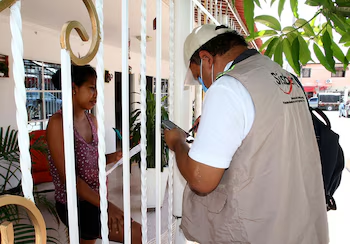
Changes in the Sisbén Score: What Citizens Should Know About Their Classification
Understanding the Sisbén System
The Sisbén (Sistema de Identificación de Potenciales Beneficiarios de Programas Sociales) is an essential program in Colombia that helps identify individuals and families eligible for government subsidies and social programs. Recently, the National Planning Department (DNP) has commenced a process of automatic updates to socioeconomic information, leading to notable variations in citizen classifications.
Reasons Behind New Classifications
The classification changes arise from a new dynamic update model that cross-references data between various public and private entities. This approach is designed to accurately reflect the living conditions of households in real-time. According to reports, the DNP aims to ensure that this updated information enhances the accuracy of socioeconomic assessments, guaranteeing that aid reaches the most vulnerable populations effectively.
Mechanism of Updates
The new Sisbén protocol allows for the verification of citizens’ socioeconomic information by adjusting classifications as changes in economic or social status are identified. This means that individuals may find their scores altered based on updated data pertaining to income, employment, health, and overall living conditions.
Classification Groups in Sisbén IV
As of now, the Sisbén IV system categorizes the population into four distinct groups:
- Group A (Extreme Poverty): Households experiencing extreme socioeconomic challenges.
- Group B (Moderate Poverty): Individuals in a moderate state of poverty.
- Group C (Vulnerable Population): Those considered at risk or vulnerable.
- Group D (Non-Poverty): Households not falling under any poverty classification.
These classifications determine access to numerous social programs, including monetary transfers, housing support, educational grants, and healthcare services.
Impact of Classification Changes
Many citizens have recently experienced fluctuations in their scores or group classifications. While some may view these changes as alarming, authorities have clarified that such updates don’t necessarily indicate errors within the system. Instead, they represent the government’s efforts to maintain up-to-date records that reflect the current socioeconomic realities faced by households.
Importance of Accurate Data
The DNP emphasizes the need for accurate and timely updates in the Sisbén system, using administrative records and cross-referenced data. This method provides a comprehensive overview of household situations that may fluctuate over time, ensuring that the socio-economic assessment aligns with people’s real conditions.
Conclusion: Staying Informed
In light of these changes, it is essential for citizens to stay informed about their Sisbén scores and classifications. Continuous monitoring and adjustments play a critical role in ensuring effective allocation of government resources to those most in need. If you experience changes in your classification, it is advisable to review the updated information and reach out to local authorities if necessary.
For more updates and helpful information, follow relevant channels such as Facebook and WhatsApp for ongoing communications from the authorities.