
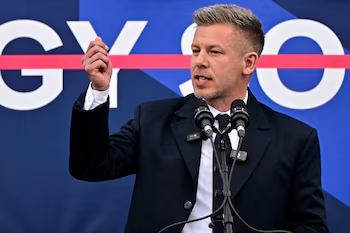
A Historic Shift in Hungarian Politics
Péter Magyar has made history in Hungary by unseating Viktor Orbán, who has led the country for 16 years. The elections resulted in a resounding victory for Magyar and the Tisza party, securing 136 seats compared to just 56 for Orbán’s Fidesz party. This triumph potentially grants Magyar a ‘supermajority’ in Parliament, enabling him to govern without forming coalitions.
Voter Mobilization and Participation
The high turnout at the polls was a significant factor in this turnaround, with participation recorded at 77.8% of the 7.5 million registered voters. This marked the largest mobilization since the fall of communism, indicating a strong desire for change among those disillusioned with Orbán’s prolonged tenure.
The Downfall of Orbán’s Regime
Orbán’s grip on power had been characterized by four consecutive mandates and a parliamentary supermajority since 2016, leading to what political scientists describe as an “illiberal democracy.” The following discontent among voters ultimately culminated in this pivotal election defeat. Upon realizing his impending loss, Orbán conceded defeat early, lamenting the rejection of his party’s governance.
Péter Magyar’s Background
Prior to his political ascent, Péter Magyar was a relatively unknown figure, largely recognized as the husband of Judit Varga, a prominent member within Fidesz. His career trajectory shifted as Varga’s political influence rose, eventually leading him to various roles within the Ministry of Foreign Affairs and the European Union. Following a scandal involving his ex-wife, which intensified political pressures, Magyar became the leader of the Tisza-Respect and Freedom Party, positioning himself as a critical voice against corruption.
Looking Ahead: Magyar’s Governance
As Magyar prepares to govern, he faces the challenge of balancing relations with Russia and approaching the European Union. He has vowed not to engage in military conflicts and plans to work towards unlocking nearly €18 billion in EU funds withheld due to governance concerns. Magyar emphasizes that such economic measures could spur growth in Hungary.
Aligning with the European Union
Under Magyar’s leadership, Hungary aims to reinforce its ties with the European Union and NATO. He has indicated intentions to hold a referendum on supporting Ukraine’s EU membership, marking a clear pivot from Orbán’s previous policies that aligned more closely with Russia. Magyar’s vision is for Hungary to reclaim its standing as a reliable ally within NATO and a fully engaged member of the EU.
Conclusion
The electoral success of Péter Magyar signifies a watershed moment for Hungary, heralding a potential reshaping of both domestic policy and international relations. As he takes office, the world will be watching closely to see how he navigates these complex dynamics and fulfills the promises made to the Hungarian people.