
Canada’s Support for Morocco’s Autonomy Plan
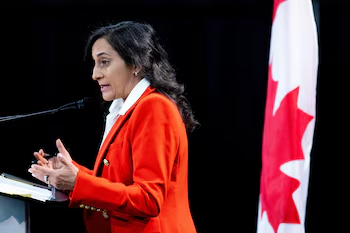
For the first time, the Government of Canada has publicly expressed support for the Moroccan autonomy plan concerning Western Sahara. This plan is seen as a potential “basis for a mutually acceptable solution” to a protracted conflict involving Rabat and the Polisario Front. This significant stance was articulated by Canadian Foreign Minister, Anita Anand, during a recent conversation with her Moroccan counterpart, Naser Burita.
Reference to UN Resolution 2797
In an official statement, Canada referenced resolution 2797 of the United Nations Security Council, which advocates for international efforts to resolve the conflict. Minister Anand emphasized that the Moroccan autonomy plan represents a “serious and credible initiative” aimed at achieving a just and lasting resolution. She underscored the necessity of reaching an agreement consistent with UN resolutions and guidelines.
Strengthening Bilateral Relations
During the discussion, Anand also indicated her intentions to visit Morocco in the coming weeks. This visit aims to fortify bilateral relationships and foster a constructive dialogue grounded in mutual respect and openness between both nations. With this engagement, Canada joins a growing number of countries, including Spain, which have expressed support for the Moroccan proposal.
Impact on the Polisario Front
The Canadian endorsement of the Moroccan autonomy plan reinforces an emerging trend of international backing for Morocco’s position. This shift complicates the diplomatic landscape for the Polisario Front, which continues to champion the self-determination of the Sahrawi people as the only legitimate path forward. The United States, under former President Donald Trump, has been instrumental in this realignment, driving recognition of the Moroccan proposal in key international forums.
A Longstanding Conflict
The conflict has its roots in Morocco’s occupation of Western Sahara following the Green March of 1975. This situation has led to decades of tension, punctuated by a UN-mediated cease-fire in 1991 and the unfulfilled promise of a self-determination referendum. Disagreements over the electoral roll, particularly the inclusion of Moroccan settlers, prevented the referendum from taking place. Consequently, the international community has been prompted to explore alternatives, often steering towards autonomy under Moroccan sovereignty.
Moving Forward with Caution
As Canada aligns with the “roadmap” promoted by the United States, which has been validated by recent UN resolutions, it acknowledges the Moroccan plan as the only “realistic” framework for future negotiations. Conversely, the Polisario Front maintains that any proposed solution must ensure the legitimate decision-making power of the Sahrawi people. The future of Western Sahara now hinges on international dialogue and pressure, aiming to include all relevant parties while the negotiating power of Sahrawi representatives continues to diminish.