
The Rise of African Football in the 1980s
In the 1970s, authoritative voices began to emerge proclaiming, “When black Africa awakens, it will reign in football.” This prediction stemmed from the immense physical potential of the people in that region, noted for their strength, agility, and speed — traits invaluable in the world of sports. Africa’s football talents were beginning to show themselves, as evidenced by players like Eusebio from Mozambique, who made an impact in Europe, and others, such as Kialunda from Congo, who found success in Anderlecht. Prominent players like Salif Keita and Biri-Biri graced clubs in Spain, revealing the prowess of black athletes on a broader scale that had already been felt in South America, especially in Brazil with legends like Pelé.
Cameroun’s Journey Through Early World Cups
In Sub-Saharan Africa, football arrived later compared to the Maghreb, and the poor conditions hampered the development of the sport. The region initially practiced a chaotic form of football for recreation rather than for competitive excellence. However, it was only a matter of time before they developed adequate fields, traditions, and a tactical culture guided by the influx of European coaches.
The first Sub-Saharan African team to participate in a World Cup was Zaire in the 1974 tournament in Germany, a venture that resulted in dismal performances. In contrast, Cameroon made its debut in the 1982 World Cup in Spain, capturing a hearts with a remarkable showing. Despite finishing level on points with Italy in their group, they were eliminated based on goal difference but showcased notable talents, particularly Roger Milla.
The Order from President Biya
By 1990, Cameroon returned to the World Cup under the guidance of Valery Nepomnyashchy, a former Soviet player. Appointed as a coach thanks to a collaboration program, he guided the team to success in qualifying rounds, defeating Nigeria and Tunisia along the way. Preparations included a suspended local league, and they trained rigorously, even resembling a Soviet army in their teardown.
A pivotal moment came when President Paul Biya ordered the inclusion of Roger Milla, then 38 and retired from professional football. Milla, who had won two African Ballon d’Ors, was coaxed back to the squad demonstrating his leadership and unparalleled experience on the field.
The Group Stages: Overcoming Challenges
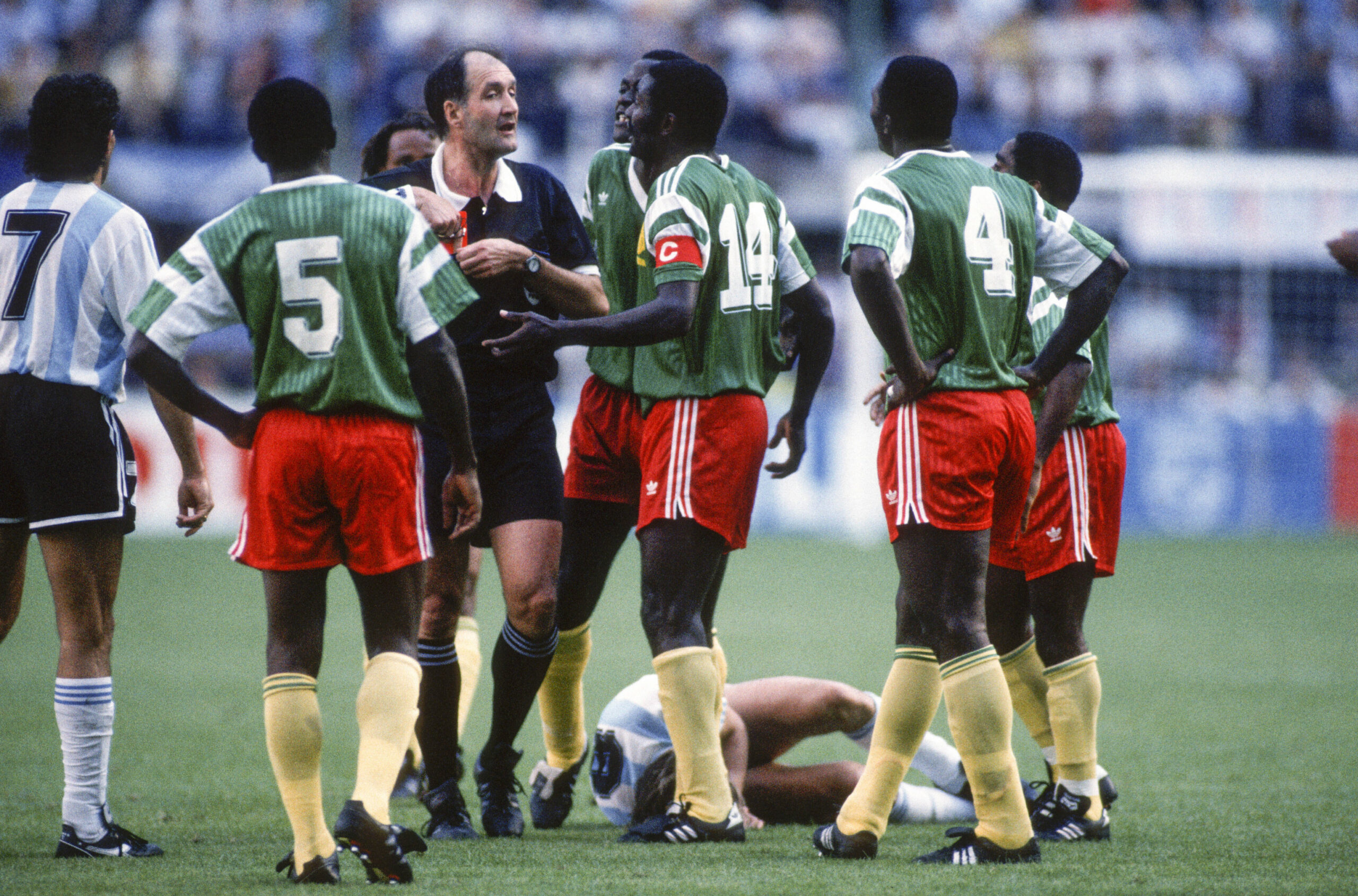
Facing the defending champions Argentina in the opening match, Cameroon was written off by many. However, they shocked the football world by defeating the South American giants, demonstrating resilience and skill. Milla’s presence proved crucial as the team showed they could play and compete at the highest levels.
The Road to the Quarterfinals
Following their sensational opening match, Cameroon went on to face Romania, where Milla’s star shone brightly again, scoring twice and securing the top spot in their group. However, internal challenges arose, including pressures from government officials regarding lineups, leading to an unexpected defeat against Russia.
But this setback only strengthened their resolve. In the knockout stages, Milla led the team against Colombia, scoring twice in extra time and firmly establishing Cameroon as a formidable force in the tournament.
Confrontation with England
As they faced England in the quarterfinals, the atmosphere was electric. The team’s morale was high as they sang traditional songs, instilling fear in their opponents. Although Cameroon fell short after a tightly contested match, the player’s iconic performance left a lasting mark on the tournament.
Despite exiting the World Cup, they captured the hearts of millions around the globe, changing perceptions of Africa. Their triumphs gave hope to a continent long overlooked in football, ushering in a new era that would later see more African nations achieving success on the world stage.
The Legacy of Cameroon in World Football
Following their historic run, members of the team were celebrated, although many faced challenges back home. Roger Milla would later return to international play at the age of 42 in the 1994 World Cup, marking a record for the oldest player to score in the tournament.
Cameroon’s journey and accomplishments in 1990 remain a significant chapter in World Cup history, serving as an inspiration for future generations of African footballers and establishing a legacy of resilience and talent.