
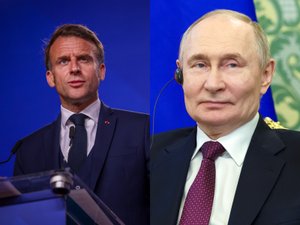
This Tuesday, July 1, the Élysée Palace announced a significant phone discussion between President Emmanuel Macron and Russian President Vladimir Putin . The conversation, which lasted over two hours, covered pressing issues such as the Iranian nuclear program and the ongoing war in Ukraine . This marked the first formal communication between the two leaders since September 2022.
During this phone call, President Macron urged for a cease-fire in Ukraine “as soon as possible” and emphasized the need to work together to supervise the Iranian nuclear program. The Élysée noted Macron’s strong stance on the sovereignty and territorial integrity of Ukraine, reiterating France’s unwavering support for the country amidst the conflict.
Very Distant Positions on the War in Ukraine
In response, President Putin expressed that any potential peace agreement concerning Ukraine would need to be “global,” addressing the fundamental causes of the conflict and acknowledging “new territorial realities.” The Kremlin’s position was clear: the conflict is a direct result of the policies pursued by Western states , which have consistently overlooked Russia’s security interests and have established what Putin referred to as an “anti-Russian bridgehead in Ukraine.”
Although both leaders agreed to maintain dialogue regarding the Ukrainian conflict, the considerable gap between their respective viewpoints was evident. The Élysée elaborated that despite this divergence, the two leaders committed to “exchanging” thoughts and potential avenues for resolution.
Iran’s Nuclear Ambitions and Diplomatic Efforts
Turning to the topic of Iran’s nuclear program, Macron and Putin reached a consensus to coordinate their approaches on the matter. The discussions emphasized the belief that diplomatic channels should be utilized to resolve escalating crises in the Middle East . Macron reaffirmed his determination to pursue a diplomatic solution aimed at establishing a comprehensive regulation of the Iranian nuclear issue, including concerns about its missile development and regional influence.
Moreover, Macron highlighted the urgent need for Iran to fulfill its obligations under the Treaty on the Non-Proliferation of Nuclear Weapons (NPT) and to ensure full cooperation with the International Atomic Energy Agency (IAEA) . He stressed that IAEA inspectors must be granted unhindered access to resume their work without delay.
In this context, Macron underscored the responsibilities of the permanent members of the United Nations Security Council regarding the nuclear issue, emphasizing the roles of both France and Russia. In contrast, President Putin defended Iran’s rights, stating that it had a legitimate claim to develop a “civil nuclear” program, a sentiment echoed by the Kremlin.
Following this significant exchange, Macron indicated his intention to further discuss the Iranian nuclear situation with each of the five permanent members of the UN Security Council—namely the United States, the United Kingdom, China, in addition to France and Russia—over the coming days. This suggests a tactical approach by Macron to consolidate a united front among the major world powers concerning Iran’s nuclear aspirations.
The Implications of Ongoing Dialogue
The phone call represents a notable moment in international diplomacy, especially considering the complexities surrounding the war in Ukraine and the sensitivities involved with Iran’s nuclear program. With France taking a pivotal role in advocating for a multi-lateral dialogue, the dynamics of global politics could be on the verge of a shift, depending on how these discussions unfold.
As the international community keeps a close watch on both the situation in Ukraine and Iran’s nuclear development, the importance of sustained dialogues between world leaders cannot be overstated. The recent conversation between Macron and Putin, though fraught with tension and differing narratives, lays a framework for further engagement, which may hopefully lead to peaceful resolutions.
In conclusion, the dialogue between these two leaders indicates a continued commitment to addressing some of the world’s most pressing issues. It remains to be seen how effective these discussions will be in achieving the desired outcomes, but the very act of engaging in conversation is a necessary step toward potential resolution and stability. The road ahead is undoubtedly complex, but with determination and diplomacy, there is hope for progress in these critical issues that concern global peace and security.