
BYD’s Zhengzhou Plant: A City of Ambition
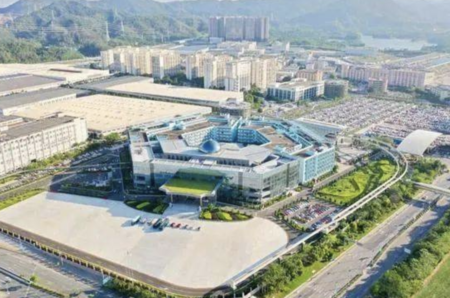
The Chinese automotive industry has a singular goal: to flood the West with its vehicles. Among various players, BYD stands out as a company eager not only to dominate the national market but also to capture a significant share of the international scene. To realize this ambitious vision, BYD operates one of the most remarkable automotive facilities globally—the Zhengzhou Plant . More than just a factory, this facility represents a small city, complete with extensive capabilities and aspirations.
Gigafactory? Rename it Uberfactory
Everything about the Zhengzhou plant is awe-inspiring. The project’s inception can be traced back to a partnership between BYD and the Henan government, signed in September 2021 . Just one month later, construction began, and less than two years down the line, the factory commenced operations.
This massive facility is designed to produce 400,000 vehicles annually in its initial operational phase starting April 2023. Not only does it boast swift operational capabilities, but its sheer size is also staggering. The currently operational area spans approximately 10.68 square kilometers , with long-term plans for expansion covering about 130 km² .
Contextualizing the Scale
In terms of scale, the Zhengzhou plant dwarfs the Tesla Gigafactory in Nevada, which covers a mere 12 km² . It is even larger than the entire area of San Francisco , estimated at approximately 120 km² . While it is not unusual for tech giants to operate extensive campuses in China, BYD’s facility is uniquely overwhelming.
More Than Just Cars
The Zhengzhou facility represents a “living” project that has already completed four phases of development. The first two phases primarily focused on vehicle production, but the plant’s ambitions extend well beyond manufacturing cars. The third phase introduced battery manufacturing, while the fourth phase aims to include semiconductor production . Plans are already in motion for future expansions targeting a production capability of two million vehicles per year . Remarkably, this facility manages to produce an entire vehicle every 50 seconds .
Automation at Its Finest
This phenomenal output is driven by an automation rate of 98% , one of the highest in the automotive sector worldwide. For instance, the welding processes employ 91% robotic labor , with hundreds of robots engaged in various tasks across assembly and logistics. The factory employs roughly 60,000 people , with around 90% sourced from Zhengzhou and surrounding areas. There are plans to increase this workforce to 200,000 employees by 2026 , effectively turning the site into a small city of its own.
A Community Built for Innovation
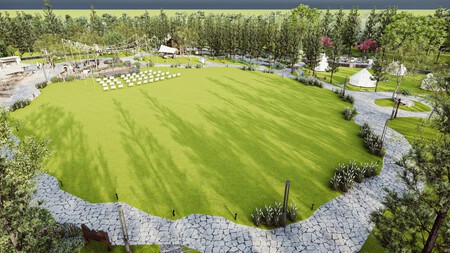
What distinguishes the Zhengzhou plant from typical factories is its self-sustaining design. Housing units, canteens, commercial zones, and recreational facilities—such as soccer fields—are all part of this integrated community. An internal transportation system also aids mobility throughout the sprawling site.
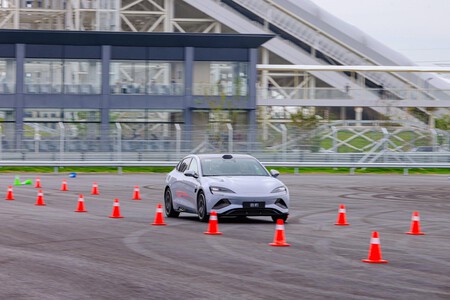
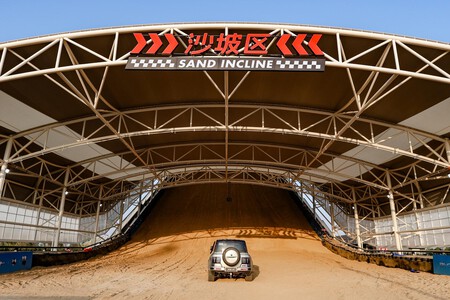
Additionally, the facility includes specialized testing grounds, featuring a 1,758-meter circuit with multiple curves, sand dunes for off-road capabilities, and pools for aquatic testing. This diverse range of testing facilities not only serves a practical purpose but also acts as a showcase for the performance of BYD’s electric vehicles .
An Economic Powerhouse
The Zhengzhou plant is not just an industrial site; it is a vital economic engine for the region. In 2024 , the city inaugurated the International Land Port , which features a one-kilometer railway line extending directly to the BYD facility. This infrastructure allows for efficient transport of finished vehicles to international markets, streamlining logistics to Europe via RO-RO ships that can reach their destinations in a matter of weeks.
Such is the significance of this plant that BYD’s seventh car carrier was named in honor of Zhengzhou itself. As China continues to set the global standard for electric vehicles, plants like Zhengzhou represent the future of automotive manufacturing.