
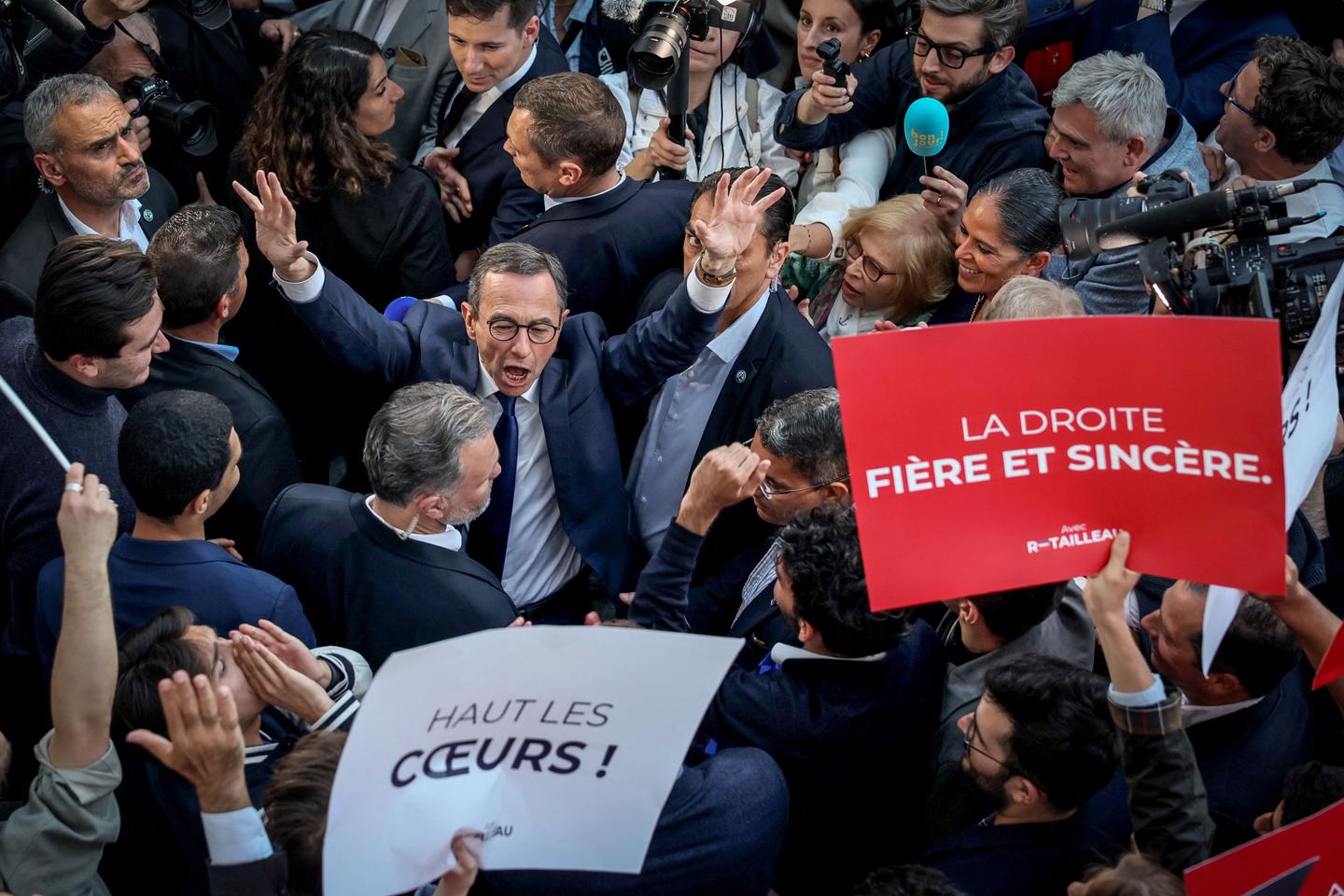
The Rise of Bruno Retailleau: A New Era for Les Républicains
On May 18, the political landscape in France witnessed a significant shift as Bruno Retailleau was elected the new president of Les Républicains (LR). Garnering 74.3% of the votes from party members, Retailleau’s victory was not only a definitive win over Laurent Wauquiez but also a welcome change for a party that has been struggling to redefine itself in recent years. With his election, Retailleau has sparked a renewed sense of hope, potentially revitalizing interest in a party that had lost its way following a series of disappointing outcomes.
The Surge of Bruno Retailleau
Retailleau’s election signals a departure from the past leadership that had, since 2017, seen Wauquiez as the uncontested leader. Wauquiez’s inability to effectively consolidate the party and attract public support made him vulnerable to this surprising upset. Retailleau, known for his firm values and moderate approach, represents a new and dynamic leadership style. His election is regarded as a ray of hope amidst the political turmoil that has plagued the party for several years.
Challenges Looming Ahead
Despite the optimism surrounding Retailleau’s victory, the challenges faced by Les Républicains are far from over. The party has struggled with coherent leadership and defining its political stance. Issues such as immigration, security, and employment dominate the public discourse, yet the party’s attention to these problems appears superficial and reactive, as they are overshadowed by broader, complex issues in society.
The tension of the current world order, particularly with the return of Donald Trump to the White House, has compounded the urgency for a strategic re-evaluation within the party. The stark motifs of fear and violence played during the election campaign do reflect a desperate attempt to rekindle interest in the party’s core themes. Still, it underscores the dwindling consensus and direction that the party has faced lately.
Membership and Electoral Challenges
As reported, Les Républicains currently boast a membership of approximately 120,000, which reflects a troubling trend in party affiliation and engagement. The 98,100 voters who participated in the elections indicate a difficult reality for LR, as these figures are significantly lower than the party’s previous heights. The decline in membership raises questions about the party’s ability to mobilize support and engage effectively with the broader French electorate.
The Legacy of the UMP
Before diving deeper into the current challenges, it is essential to recognize the historical context of Les Républicains. The party, formerly known as the UMP, underwent a drastic transformation following the defeat of Nicolas Sarkozy in 2012. Since then, the remnants of the UMP have been marked by a series of scandals and misfortunes, including accusations of electoral fraud and legal scandals that haunted key figures within the party.
Each of these instances—from the Bygmalion case to François Fillon’s disappointing showing in the 2017 presidential election—has contributed to the party’s dwindling reputation. The successive challenges of leadership disputes and public disillusionment have left LR in a precarious position, struggling to assert itself as a viable option in French politics.
The Road Ahead
Looking forward, Bruno Retailleau’s challenge will be to unify the party under a coherent policy framework that resonates with both its membership and the wider electorate. The party’s historical struggle with alliances—such as those formed in response to the threat posed by the National Rally—continues to complicate its path. Retailleau must navigate these alliances carefully while establishing trust among party members and engaging effectively with potential coalition partners.
Moreover, revitalizing public interest in the party will require more than just focus on traditional themes; it will necessitate a bold and agile response to contemporary societal challenges, ranging from economic disparities to social justice concerns. By doing so, Les Républicains can aspire to reclaim their position as a key player in the evolving political landscape of France.
The outcome of this leadership shift is yet to be seen, but it undeniably marks a pivotal moment in the transformation of Les Républicains, setting the stage for a potential resurgence in the coming years.