
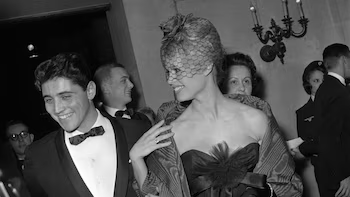
Brigitte Bardot: The Icon of Freedom and Love
The Beginnings of Brigitte Bardot
Brigitte Bardot entered the world in 1934, born into an affluent Parisian family. Initially aiming for a career as a classical dancer, her journey took a sharp turn towards cinema after a fateful photoshoot led to her first casting. Bardot’s beauty didn’t just adhere to conventional standards; it redefined them, making her an icon of the post-war era and a muse for directors like Roger Vadim, who would later become her first husband.
A Life of Romance and Controversy
Bardot’s romantic escapades became as legendary as her film career, with some accounts suggesting she had over 100 lovers. Her marriage to Roger Vadim in 1958 was a blend of artistic collaboration and emotional turmoil, marking her entry into the spotlight with the provocative film “And God Created Woman.” This film not only showcased her as a sensual entity but also stirred moral debates in both Europe and America.
However, her personal life continued to unravel in the public eye. Infidelities, tumultuous relationships, and intense media scrutiny took a toll on her emotional well-being, leading to several suicide attempts. In 1959, she married actor Jacques Charrier and became a mother to her only son, Nicolas. Yet, motherhood didn’t suit her, resulting in a strained relationship with her child as her commitment to her individual freedom clashed with societal expectations.
The Cultural Muse
Bardot’s most notorious liaison was with musician Serge Gainsbourg, generating artistic masterpieces like the controversial song “Je t’aime… moi non plus.” Their relationship epitomized a passionate, uninhibited love that transcended conventional boundaries and established Bardot as a muse beyond the realm of cinema.
Her brief third marriage to German millionaire Gunter Sachs was primarily a media sensation, filled with extravagant gestures and a quote that epitomized their short-lived romance: “A year with Bardot is equivalent to a decade of conventional life.”
Retreat from the Spotlight
In the 1970s, Bardot’s fame reached staggering heights, even being compared to industries like automobile manufacturing in terms of economic impact on France. Yet, the relentless media scrutiny and the pressure to maintain her iconic status drove her to withdraw from public life in 1973.
A New Chapter: Animal Welfare
Post-retirement, Bardot redirected her energy towards animal welfare, establishing the Brigitte Bardot Foundation and advocating for animal rights. She famously stated, “I gave my youth to men; now I give the best of myself to animals,” showcasing her determination to live authentically on her own terms.
The Later Years
Bardot married Bernard d’Ormale in 1992, bringing a sense of domestic tranquility to her life, albeit not without controversy. Known for her controversial political opinions, she faced legal issues stemming from statements deemed offensive to various communities.
Conclusion
Brigitte Bardot remains a symbol of freedom, love, and the complexity of human emotions. Her life story intertwines fame, romance, and a fierce dedication to animal welfare, marking her as a unique figure in 20th-century culture. As we reflect on her legacy, Bardot continues to inspire discussions around individuality and the pursuit of happiness, solidifying her status as an enduring icon.