
The Tensions within the PSOE: A Look at the Recent Conclave
In a significant moment for Spain’s political landscape, tensions within the Spanish Socialist Workers’ Party (PSOE) have reached a boiling point. This comes after the outspoken remarks made by Óscar Puente, the Minister of Transportation, directed towards Emiliano García Page, the president of Castilla-La Mancha. During a speech at the PSOE’s Federal Committee, Puente expressed concerns over García Page’s criticism of Prime Minister Pedro Sánchez, creating a local controversy that has implications for the national party.
The friction stemmed from a backdrop of internal party strife. García Page called for Sánchez to consider a matter of confidence in Congress or to even convene early general elections. He expressed skepticism regarding the government’s measures, describing them as inadequate to address the crisis that has rocked the PSOE—what he labeled as the deepest challenge facing the party in its democratic history. This turmoil had escalated to the arrest of Santos Cerdán, former secretary of Organization, showcasing the depth of the crisis.
Puente’s Strong Critique
When Puente took the stage, he did not shy away from delivering a hard-hitting critique of García Page. He accused him of being hypocritical, specifically targeting comments made by the Castilla-La Mancha leader that suggested other party members could also find themselves facing legal troubles. “Some do not even know if they are going to fulfill the weekend in the same position or will continue in politics,” Puente remarked, amplifying the stakes of the ongoing situation.
García Page’s earlier statement hinted at uncertainties in the political futures of various individuals within the PSOE, stating, “They do not know if they will be free to walk down the street or have to be seen in a jail.” This level of discourse reflects a palpable sense of crisis and uncertainty within the party ranks, and it has incited responses that challenge the cohesion necessary for a successful political entity.
The Call for a Response
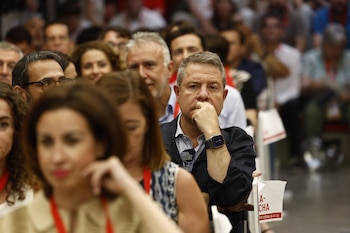
Feeling the heat from Puente’s remarks, García Page requested to respond during the Federal Committee. His bid to regain some footing in the debate was marked by the gathering of nearly fifty leaders from across the party who raised their hands to speak. This not only illustrated the gravity of the situation but also underscored the increasing divisions within the PSOE about the direction it should take.
Many involved with García Page’s team are interpreting this request for intervention as a testament to the dissent that exists beneath the surface. It suggests that there is more than just a single voice opposing Sánchez’s leadership. The sheer number of participants signaling the desire to speak feeds into a narrative that García Page isn’t alone in his sentiments, potentially allowing for a reassurance that some party members are hesitant about the current strategy.
Nevertheless, the Federal Committee did not allow for his response. Sources from within Ferraz, the PSOE headquarters, indicated that despite numerous requests to speak, García Page was not granted the chance for further rebuttal. This decision is seen as a strategic maneuver, possibly to stifle dissent and maintain a unified front in light of ongoing challenges.
Repercussions of the Discontent
The fallout from these exchanges has catalyzed new dynamics within the party. García Page’s allies expressed discontent over Puente’s critique, suggesting that substantial energy has been diverted to attacking him rather than focusing on national policy issues or preparing for upcoming challenges. They may perceive the internal conflict as damaging, risking fragmentation in a party that requires unity to navigate national challenges effectively.
Furthermore, some in García Page’s camp argue that Puente, as a member of the federal executive, should have refrained from making a significant intervention after Sánchez had spoken. This raises the question of party leadership and the respect for hierarchical structures within the PSOE.
The implications of these events extend beyond just the individual members involved. The internal rifts represent broader concerns for the PSOE as it grapples with maintaining its political relevance amidst an evolving landscape. With public trust wavering and a critical response necessary, the party must decide whether to maintain unity or embrace differing viewpoints that could either invigorate or destabilize its foundation.
As the Spanish political scene continues to unfold, the PSOE stands at a crossroads, where the paths of dissent and unity will ultimately define its future direction.