
The Role of Media in Spain’s Transition to Democracy
The amnesty law recently endorsed by the Constitutional Court of Spain is sparking conversations that reach back to the nation’s transition from dictatorship to democracy. In a compelling speech, Minister of Justice Félix Bolaños emphasized the significance of reconciliation during this transformative period in Spanish history. On the backdrop of his discourse were the complex and often difficult dialogues that led to a restored peaceful coexistence among previously polarized groups.
Reflections on Historical Consensus
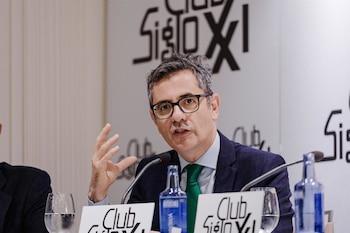
During a colloquium hosted by the magazine Change 16, Bolaños highlighted the profound consensus that characterized the transition era. This period, he noted, marked the emergence of Spain as a modern democratic state, sharing the values of prosperity and peace. It was a time when media played a crucial role in shaping public perception, with broadcasts capturing monumental moments such as Spain’s entry into the European Economic Community (CEE).
"Forty years later, we can look back with pride on what we have accomplished," Bolaños stated. He credited various media outlets, including Change 16, for their commitment to democracy, which contributed significantly to the complexities surrounding Spain’s transition. He pointed out that, during this era, journalism was primarily focused on delivering factual information rather than blending opinion and reporting, which is a trend some argue permeates today’s media landscape.
Modern Challenges in Journalism
In his address, Bolaños made a clear distinction between authentic journalism and what he termed "pseudomedia." He argued that while valid journalists contribute to an informed public, there are those who "defore," actively spreading misinformation. This dichotomy raises concerns about the current state of information integrity, especially as it pertains to societal unity.
"Journalism was essential after the dictatorship," he affirmed, recalling how reporters committed themselves to promoting freedoms and democracy. According to him, this dedication enabled a clearer vision of the country’s realities. In stark contrast, today’s media often intertwines opinion with news reporting, which can lead to public confusion and distrust.
A Path Towards Reconciliation
Bolaños reiterated that Spain’s transition involved not just political changes, but also emotional and social restorative measures, particularly in addressing repression and historical grievances. He emphasized that the amnesty law serves as a means to foster dialogue and reconciliation among those previously at odds due to the Catalan independence movement, which sparked significant tensions within the country.
He proposed that the solutions of the past can inform present and future efforts to heal these rifts, just as they did decades ago. "Looking at the mirror of other countries," he concluded, "Spain not only holds its place within the European Union but leads debates, representing its interests with confidence."
Cultural Reflection and Future Aspirations
Bolaños urged attendees to "look up" and envision what Spain could become by 2025. He expressed optimism about the future, yet cautioned against the implications of polarization, which he noted exists on a global scale. This societal fragmentation, according to him, often highlights division rather than unity.
In addressing this, Bolaños called for a collective effort to focus on what can be achieved together rather than what divides. Spain must harness its historical lessons to navigate the complexities of its modern identity, all while fostering an environment where coexistence prevails over conflict.
In summary, the conversation initiated by Minister Bolaños underscores the multifaceted challenges Spain faces as it continues building upon its historical legacy while managing the realities of today’s complex societal dynamics. His speech echoed a sentiment of hope, urging all Spanish citizens to take pride in their past while extended the call toward cooperation and understanding for a more unified future. The steps towards amnesty and reconciliation are just beginnings; the path forward requires a steadfast commitment to democracy along with the courage to confront and learn from the past.