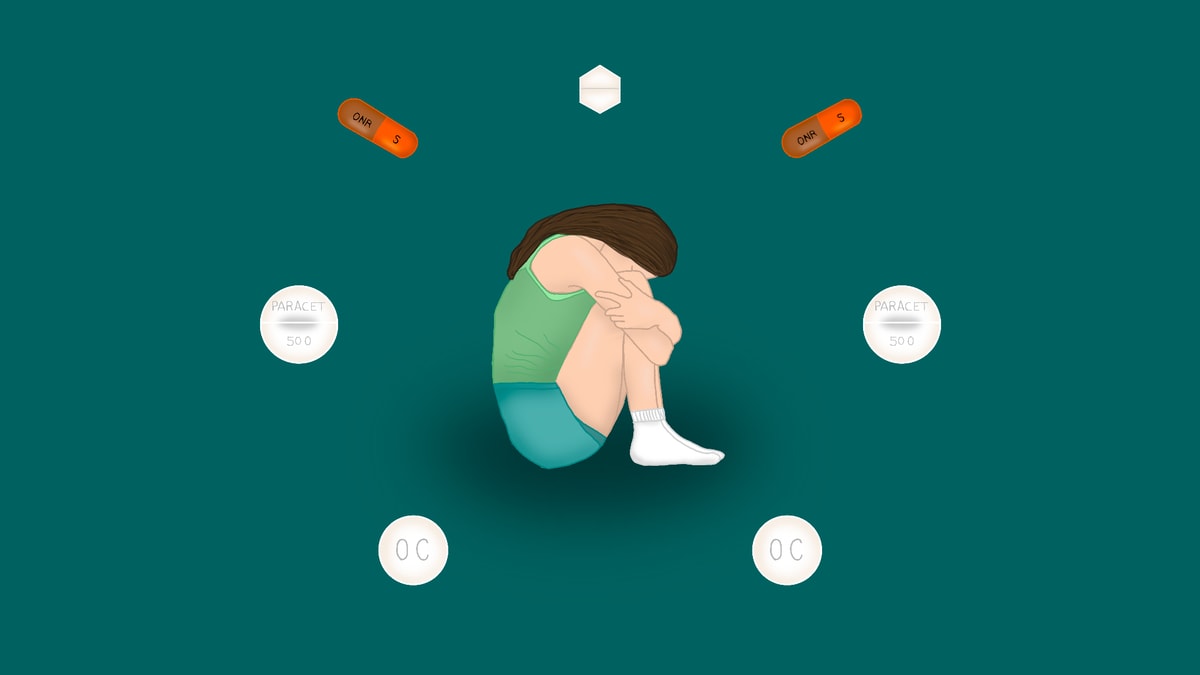
The case summarized: Norwegian women receive different offers of painkillers at home abortion, depending on which hospital they go to. Some hospitals only provide paracet and voltaren, while others provide stronger painkillers like oxykondon. Midwife Kristin Holanger Bodenstein believes there is a need for a national procedure to ensure equal and good access to abortion pain relief. Some women experience severe abortion and believe that they get too little painkillers. The summary is created by a Ki service from Openai. The content is quality assured by news’s journalists before publishing. Around 12,000 women go through an abortion each year. Most people take the abortion at home. But the medicines they bring to dampen the pain are different from city to city. It simply depends on which hospital they seek out. – I see no good reason why it should be so different, says Kristin Holanger Bodenstein. From Paracet to strong opiate Bodenstein is the midwife and has helped to investigate the basis for the new abortion law that was adopted last year. In 2022, she carried out a survey of the offer at the gynecological departments at the hospital in the country. – It was everything from almost nothing, to a full package, says Bodenstein. Kristin Holanger Bodenstein also sits on the board of the trade union for Norwegian nurses and midwives. Photo: Midwife NSF The situation is even today, shows a ring round news has made four different hospitals. Some hospitals tell the women to take the paracet and the voltar. Others send women home with tablets with oxykondon. It is an opiate related to morphine and heroin, and is only used when other painkillers do not help. – There is a need for a national procedure here that ensures that women get equal and good access to pain relief, Bodenstein believes. Painkillers at Norwegian Hospital news have checked the hill four different hospitals in Norway handle the pain of women who have abortion at home. In addition to the drugs mentioned below, it is common to include nausea tablets. These are the answers we received: Oslo University Hospital Starting dose: Paracetamol 2 g Tabletter Viklofenak 100 mgoxycontin 10 mg (long -term -acting strong opioid) if needed: Oxynorm 5 mg (short -term -acting strong opioid), with two tablet dieklofenak 25 mgs in combination with paracetam 500 mg, 2 tabletter dieklofenak 50 mg, 2 tablet tramadol (morphine-like opioid) is given to women in week 8-10 in pregnancy. Those who are under 8 weeks can also bring Tramadol after individual assessment. If required: Paracetamol 500 mg (up to 4 tablets) Diklofenak 50 mg (up to 2 tablets) Nordland Hospital Starting dose: Paracetamol 1 g Sticking diclofenac 100 mg if required: Paracetamol 1 gram (up to 4 pcs. Starting dose: Ibux 400 mg, 2 tablets paralgin Major, suppository (combination of paracetamol and codeine which is an opioid) if needed: Paracetamol 1 Gibux 400 mg The active substance paracetamol is known under the brand name Paracet. The active substance Diklofenak is perhaps best known under the brand name Voltaren. The active substance Ibuprofen is best known by the brand name Ibux. Both oxyContin and oxynorms contain the active ingredient oxykondon. The difference is how long they work. – Never more unprotected sex Frida Øseth was 20 when she went through an abortion in Trondheim. She was well received at the Gynecological Department at St. Olavs Hospital. There, the abortion process was started. Then she was told to go to a pharmacy on her way home and buy Paracet and Ibux. It was nowhere near enough for her. – It was absolutely fucking. It is not possible to release so little painkillers, says Øseth. She describes the pain as traumatic. – I have never in my life had unprotected intercourse again. Because I’m so scared that it will be an abortion. Has increased the dose of Dr. Cecilie Hagemann at the Women’s Clinic at St. Olavs Hospital says that they regret that Øseth experienced such severe pain and had a traumatic experience of the abortion. -We probably have not clearly informed that for some it is very painful to undergo an abortion, regardless of pregnancy length, Hagemann writes in an email. Cecilie Hagemann says that women who have abortion at home receive written information about the ridge they will take on painkillers and a phone number they can call around the clock. Photo: Lise Sørensen at the Hospital in Trondheim has now increased the dose of painkillers. It happened for just a few weeks. They have begun to give palargin major as a suppository, in addition to what Frida Øseth got in 2021. – Both because for some, only Paracet and Ibux may be inadequate, and because it (stabbing) is beneficial for those who are nauseated by the pain and vomit, Hagemann writes. Very different where bad an abortion is another woman interviewed for this case, says that the painkillers she got from the hospital in Bergen Funka quickly and well. In addition to the abortion pills, she brought with her paracet and voltar to dampen the pain. – I sat in the bathroom thinking: This is the worst thing I’ve ever experienced. But then it didn’t take long before that medicine looked in, fortunately. Also in Bergen, they have subsequently increased the amount of painkillers they provide in connection with home abortion. The stories of the two women illustrate that the pain that the individual receives are very individual, and that painkillers with about the same strength can have different impacts. We asked the followers of @nrkniels on Instagram about their experiences with pain associated with home abortion. These are their answers: Stronger painkillers gave effect Kirsten Hald is the head of the gynecological department at the Oslo University Hospital (OUS). Here, as standard three tablets with oxykondon with different working time. – I think it is better that they get well with painkillers with them. The pain of an abortion is different, but for many there is a need for what we give. Hald says that they began to give two strong pills in 2017. For a couple of years, they increased the number to three pills. – We have the impression that this had a good effect, and we felt that fewer needed to get back into the hospital due to pain. The department head says they provide significantly more painkillers than recommended in the method book for gynecology. Kirsten Hald is responsible for the abortion offer at Oslo University Hospital. Photo: Ola Vatn / news – but there is really no reason why women need less at home than they do inside hospital. We give the same as if they were in hospitals. Hald seems to be “quite sparse” to send with weaker medicines for abortion pain. Nor is she worried that the women would think of selling the tablets they bring with them against abortion pain. – We know they are doing the abortion. They usually take the oxyContin itself. We think they are unlikely to sell it on the street. Must ask about pain Nordland Hospital provides the least painkillers of the four hospitals that news has contacted. Women in Bodø and the surrounding area get the paracet and the voltar when they have abortion at home. Department chief Stine Andreasen says that they follow the recommendations in the Gynecology method book. – We do not get many feedback on the need for painkillers beyond that dosed in connection with the abortions. Stine Andreasen has previously developed a new speculum, an instrument used in gynecological studies. Photo: Induvita AS Andreasen says they will send out a survey to the women who have abortion at home, where pain will be one of the topics. According to her, they will consider changing the use of painkillers if all other hospitals follow another standard. In addition, she is waiting for a possible change in the method book. – Problematically Tilde Broch Østborg is the deputy leader of the Council for Medical Ethics and Dr. at the Women’s Clinic at Stavanger University Hospital. She does not like that there is a difference in treatment from city to city. – It is problematic because health care and pain relief should not depend on where you live. Østborg has also been part of the committee working on the new abortion law that was adopted last year. – Pain relief should be sufficient and good whether you are in one hospital or the other. Tide Broch Østborg is a specialist in maternity care and women’s diseases. Photo: Hanne Høyland / news She says there is no clear facet here, and that more research should be done on this. But she emphasizes that there are advantages and disadvantages of publishing strong painkillers. – I don’t think there is bad will in this. Do you know what you are really entitled to when going for a gynecological examination, and how is it going to take place? You get the answer in this video: What is you really right when going to a gynecological examination, and how is it going to take place? Published 07.05.2025, at. 13.31
ttn-69