
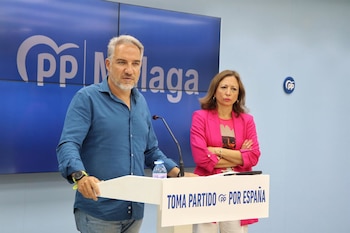
Political Developments in Spain have been increasingly turbulent, with various political actors expressing their concerns regarding the current government. On Wednesday, Elías Bendodo, the Deputy Secretary of Autonomous, Municipal Policy and Electoral Analysis of the PP (Partido Popular), gave a press conference in Malaga, predicting that the political course ahead would be marked by the “farewell of Sanchismo,” referring to Prime Minister Pedro Sánchez’s leadership style and governance. He asserted that “this government does not give more of itself,” directly questioning the viability of Sánchez’s administration.
Bendodo articulated his frustrations by criticizing the government’s apparent actions going against the best interests of the Spanish people. He claimed that the political course commenced with the government operating in “bad faith,” asserting that the administration seemed to treat the citizens as uninformed. Citing an example, he highlighted the decision to avoid holding a plenary session in Congress on September 11th, coinciding with the Diada celebration, suggesting it was merely a disguise for the government’s underlying issues.
He noted that the upcoming Diada celebration would lead to an absence of Catalan deputies in Congress, especially those from the separatist faction. Bendodo accused the government of using the Diada as an excuse to suspend the Congress session instead of prioritizing governance and representation. He further insinuated that the government’s tactics mislead citizens, emphasizing that such maneuvers undermine the democratic process.
Bendodo’s statements echoed a sentiment among critics that Sánchez’s administration fails to uphold the responsibilities of governance during crises. He further insisted that effective leadership is demonstrated through crisis management and believed the current government has consistently failed to address pivotal challenges that Spain has faced, including the COVID-19 pandemic, energy crises, and wildfires. His viewpoint suggests that the government has not only neglected domestic issues but also tarnished the country’s reputation internationally.
He believes that “a government and a political leader are measured in the management of crises,” and according to him, Sánchez has demonstrated an incapacity to lead under pressure. Bendodo asserted that each time Spain requires government intervention in times of crisis, the administration proves to be ineffective, which could risk eroding public trust and faith in the political system.
Bendodo summarized his critique by stating, “the fundamental reason” for the government’s failures was a shift from a sense of state to political tactics focused on short-term gains. He suggested that Sánchez prioritizes political maneuvering over long-term, sustainable solutions for the nation, revealing a troubling trend where voting strategy overshadows the critical need for national governance and care for constituents.
In a vivid example of the current political climate, he referenced the corruption allegations surrounding key players in Sánchez’s administration, remarking that “you cannot govern when your government is surrounded by corruption.” He underlined the need for accountability, implying that Sánchez will eventually need to address these issues in relevant forums, advocating for transparency and responsible governance.
Bendodo also took time to criticize the ongoing negotiations between political figures Otegi and Junqueras, whom he accused of engaging in “blackmail” to extract concessions from the Sánchez government. He maintained that their collaboration represents an exploitation of the political system that could ultimately harm Spain’s integrity and governance framework.
In conclusion, the risks of continued poor governance and weak leadership could have lasting effects on Spain’s future. As political tensions rise and the need for competent leadership becomes increasingly urgent, Elías Bendodo’s observations underscore the importance of accountability, transparency, and effective crisis management in the political sphere. A call for change echoes through the political landscape, as many citizens yearn for a government that prioritizes their needs rather than political expediency.