
Understanding the Controversy: Ione Belarra’s Position on Palestine and its Reception
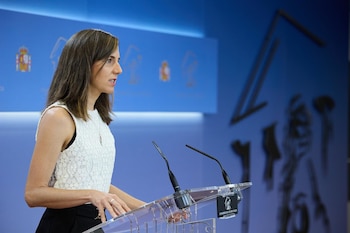
In recent weeks, Ione Belarra, the general secretary and deputy of Podemos, has sparked significant debate regarding her views on the ongoing conflict in Palestine. In a statement that garnered attention, Belarra expressed her sentiments on social media, revealing the complexities surrounding political discourse related to this contentious issue.
Belarra noted that she felt it was an honor that the United States labeled her actions as anti-Semitic, specifically regarding her organization of a congressional event titled “Palestine and Criminalization Defense in Europe.” This event featured prominent activists advocating for Palestinian rights. Her remarks, made via the social media platform X, positioned her in direct opposition to the prevailing views of significant political powers.
According to Belarra, to receive such criticism from the U.S., which she labeled as co-responsible for “genocide against the people of Palestine,” is a badge of honor. Her assertive language reflects a broader sentiment among some left-leaning European politicians who perceive the Israeli-Palestinian conflict through a lens of anti-imperialism and solidarity with oppressed nations.
The U.S. State Department responded to Belarra’s remarks through its annual human rights report, which condemned her actions at the event held on June 3, 2024. Their report highlighted that speakers at the event glorified Hamas’s attack on October 7, 2023, while claiming that Israel had “no right to exist.” This statement exemplifies the profound divisions within political dialogue surrounding Israel and Palestine.
Furthermore, the report indicates that segments of the Jewish community have voiced strong concerns regarding comments made by politicians that echo sentiments considered anti-Semitic. The classification stems from the belief that such comments contribute to a hostile environment for Jewish individuals and fuel anti-Semitic narratives.
The implications of such declarations resonate deeply within European politics. As the Israeli-Palestinian conflict remains a flashpoint for political and social strife, leaders like Belarra advocate for a discourse that challenges conventional narratives. They often argue that Palestinian rights are an essential aspect of global human rights discussions, shedding light on the plight faced by Palestinians under occupation.
The conversation surrounding Belarra’s views on Palestine reveals a broader trend in European politics where a wave of solidarity movements have emerged, advocating for Palestinian freedom and echoing sentiments of anti-colonialism. While some politicians position themselves firmly against this perspective, arguing for Israel’s right to defend itself, others, like Belarra, utilize their platforms to articulate a vision rooted in justice and equality.
Interestingly, the conversation is not without contention; critics argue that sensationalizing conflict can inadvertently lead to a rise in hostility towards Jewish communities in Europe. The delicate balance between supporting one group and ensuring the safety of another reflects the complexities of the Israel-Palestine narrative.
Belarra’s comments have not only ignited dialogues across various political factions but also illuminated the intertwining of local and global politics. For many in Europe, the Palestinian plight is not just an overseas issue but a mirror reflecting historical injustices and contemporary struggles against oppression.
As political polarization continues to affect discussions surrounding the conflict, the responses from various entities—including governments, communities, and international organizations—will play a critical role in shaping future conversations. For now, Belarra’s position serves as a reminder of the ongoing battle over narratives and the importance of acknowledgment in historical and modern contexts.
Tensions are mounting as this discussion unfolds, and it is evident that the pathways to resolution are complex and fraught with historical grievances. Understanding the many layers of this issue is essential for anyone engaged in global politics. The reactions and statements from key political figures demonstrate that as long as the conflict persists, robust discussions about rights, responsibilities, and the quest for peace will continue to unfold.