
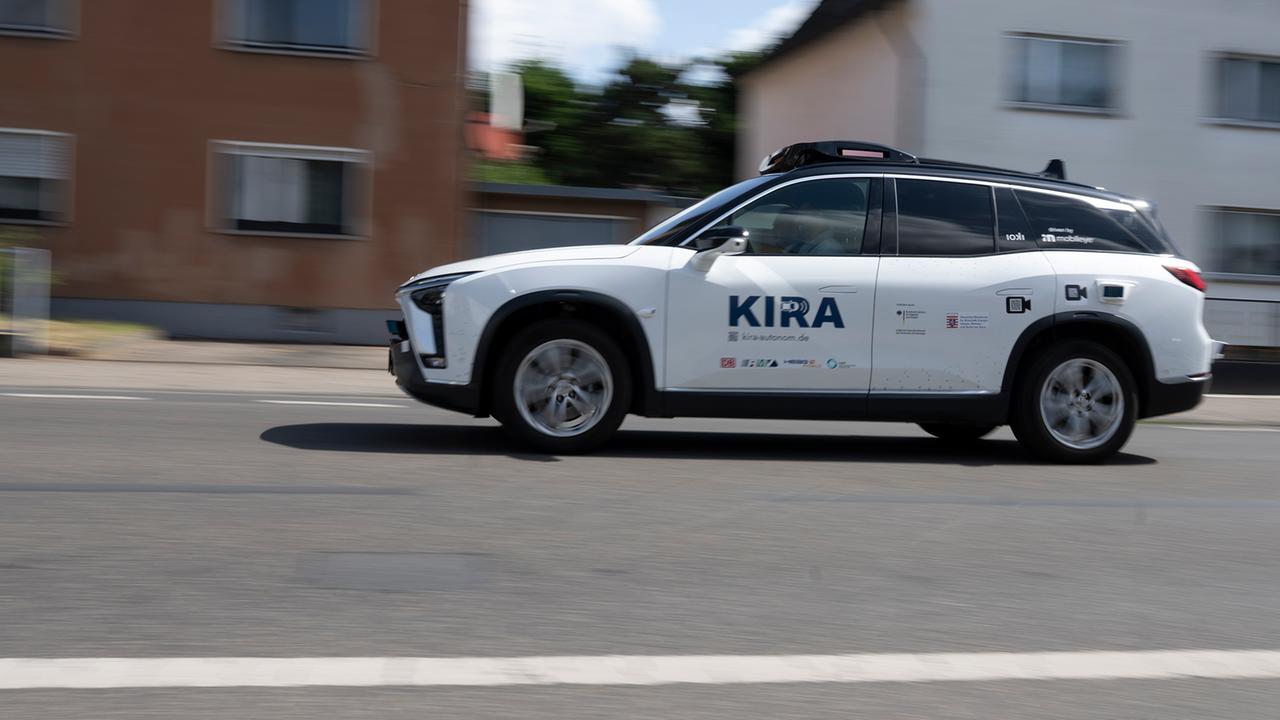
The Road to Autonomous Public Transportation: Project KIRA in Hessen
Introduction to Project KIRA
In a world where technology continues to evolve, the introduction of autonomous vehicles represents a significant leap towards a modern, efficient public transport system. Project KIRA, initiated in the Hesse region of Germany, seeks to address pressing issues related to rural public transport accessibility. This initiative aims to connect underserved communities with essential services, reducing the feeling of isolation that many residents experience.
Understanding Autonomous Driving
Stepping into an autonomous vehicle is an eye-opening experience. While a safety driver sits behind the wheel, their role is primarily reactive. As the self-driving shuttle accelerates smoothly to its maximum speed of 50 km/h, passengers can observe the vehicle’s advanced capabilities. A large display in the middle console provides a comprehensive view of the surroundings, highlighting not only nearby vehicles and obstacles but also pedestrians and their movement trajectories.
Navigating Complex Traffic Situations
As we approach a roundabout, the vehicle’s sensors begin to calculate the best course of action. The car decelerates well in advance, cautiously entering the roundabout. As a passenger, the experience is surprisingly reassuring, showcasing the potential of technology to enhance safety on the roads. With such capabilities, Project KIRA aims to redefine how we perceive public transportation, especially in rural areas.
Pilot Phase of Project KIRA
KIRA: The Trailblazer for Autonomous Public Transport
Project KIRA has gained the distinction of being the first initiative in Germany to test autonomous vehicles for public transport at Automation Level 4. This level signifies that vehicles can operate independently within designated areas, paving the way for a more autonomous public transport system.
KIRA stands for "AI-based Regular Operation of Autonomous On-Demand Transport." The project is spearheaded by Deutsche Bahn in collaboration with the Rhein-Main-Verkehrsverbund RMV. This collaboration aims to create solutions tailored to modern mobility challenges.
Hessian Districts as Testing Grounds
Currently, residents in the towns of Langen and Egelsbach can book and utilize these shuttle services. Registered users must download the KIRA app and be at least 18 years old, allowing them to enjoy free rides during the test phase. The initiative highlights the increasing necessity for efficient transportation in regions where traditional services have diminished.
Knut Ringat, Managing Director of Rhein-Main-Verkehrsbund, shares, "Ten years ago, smaller towns lost their bakeries and butchers. Five years later, ATMs disappeared, adding to the sense of alienation among rural residents." KIRA offers a promising solution for those who feel left behind in this technological era.
Technology Behind KIRA
The Driving Command Center
The autonomous vehicles are equipped with 13 cameras, six radar sensors, and nine Lidar sensors to maintain a complete perception of the environment. Lidar, which stands for Light Detection and Ranging, uses light pulses to measure distances and create 3D models of objects. This multi-layered sensor approach ensures that even if one system encounters issues, the other can maintain operational safety.
The combination of technologies fosters a comprehensive understanding of surrounding conditions, enabling the vehicle’s safe operation even in adverse weather.
Future of Autonomous Public Transport
Speeding into the Future
With the capability to navigate complex traffic scenarios, these electric vehicles can reach speeds of up to 130 km/h while ensuring a range of approximately 400 kilometers. Designed to accommodate at least three passengers, the vehicles are set to transform public transport in the region.
During the testing phase, a safety driver will oversee operations. However, the goal remains to realize fully autonomous driving within public transport by the 2030s. As Kaweh Mansoori, Minister of Economy, Energy, Transport, Housing, and Rural Affairs in Hesse, states, "Our aim is to integrate autonomous driving into public transportation seamlessly."
Government Support
The federal government backs Project KIRA, underscoring the potential of autonomous driving as a key technology for promoting innovative, sustainable, and accessible mobility solutions. "Autonomous driving is essential for creating an environmentally friendly transportation system," remarks Federal Minister of Transport Patrick Schnieder.
In conclusion, Project KIRA is positioned to revolutionize public transportation in Hesse by bridging the gap for rural communities and harnessing the power of autonomous technology. As we look toward the future, the possibility of a more integrated, efficient, and inclusive transportation system seems within reach.
Lange Wege zum Supermarkt und Geldautomaten – aber weder Bus, noch Bahn: Auf dem Land fühlen sich viele Menschen abgehängt. In Hessen startet ein Pilotprojekt, das Abhilfe schaffen soll.