
Australia’s New Gas Reservation Strategy
Introduction of the 20% Domestic Gas Reservation
In a decisive move to safeguard its energy security amidst global fluctuations, Australia has unveiled a mandate requiring major gas companies to reserve 20% of their liquefied natural gas (LNG) exports for domestic consumption. This initiative aims to mitigate energy shortages and counteract price surges attributed to ongoing unrest in the Middle East.
Government Announcement
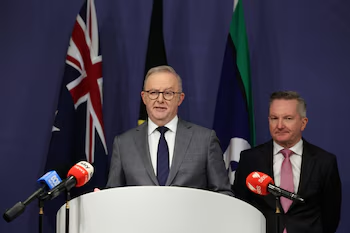
Energy Minister Chris Bowen announced these measures, emphasizing the necessity to prioritize Australian needs as international demand escalates. “We have been acting to protect Australians from global energy crises by investing in reliable, state-owned renewable energy, and keeping more of the gas we need on land,” Bowen stated during a press briefing.
Australia’s Standing in the Global LNG Market
As a leading global exporter of LNG, Australia plays a crucial role in fueling Asia, with 40% of Japan’s LNG supply sourced from Australia, alongside 30% for Singapore. The new reservation policy is designed not only to ensure local availability of gas but also to reinforce Australia’s commitment as a reliable energy supplier to its trading partners.
Legislative Timeline and Government Support
The Prime Minister’s administration, under Anthony Albanese, intends to implement supporting legislation for this reservation policy, set to commence in July 2027. Given Australia’s geographic isolation and limited refining capacity—operating only two oil refineries—the nation finds itself particularly vulnerable to interruptions in global fuel supplies.
Industry Response and Criticism
Major gas companies, including Shell, Chevron, and Woodside, have previously seen significant profits from exporting LNG. However, there are mounting calls for the government to explore increasing taxes on these exports, a proposal Canberra has recently dismissed.
Strengthening Energy Security Measures
In response to potential disruptions in global oil shipments, exacerbated by the Iranian regime’s control over the Strait of Hormuz, Australia announced a plan to establish a national fuel reserve of one billion liters. This strategic reserve aims to ensure long-term access to vital fuels such as diesel and aviation fuel. “Our number one priority remains protecting Australia from the worst effects of this crisis,” Albanese assured the public.
Conclusion
The proposed domestic gas reservation policy underscores Australia’s commitment to protecting its energy needs while upholding its international obligations. As the nation prepares for the challenges posed by global energy instability, these measures could serve to fortify Australia’s energy resilience, ensuring that domestic requirements are met even amidst international tensions.
With more detailed measures set to be introduced in the upcoming budget, Australia’s approach reflects a proactive stance in the face of an increasingly volatile energy landscape.