
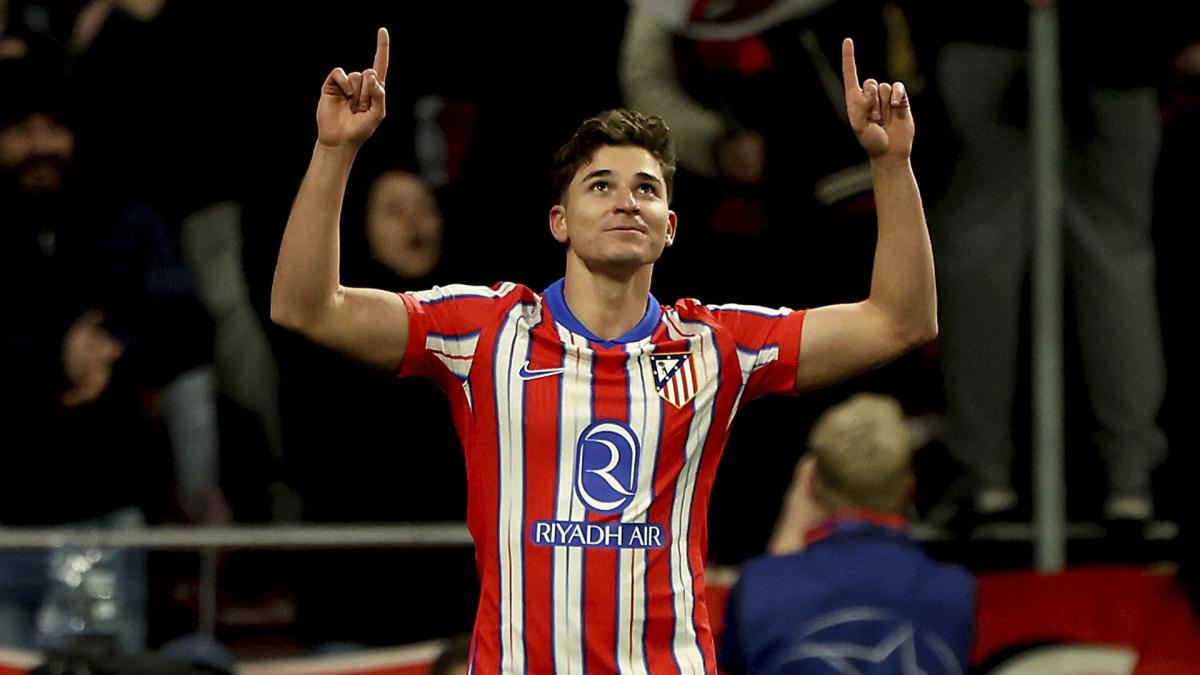
Atlético Madrid’s Outrage Over Julián Álvarez’s Exclusion from The Best 2025
The omission of Julián Álvarez from the 22 strikers nominated for The Best 2025 award has ignited a firestorm of criticism and disappointment at Atlético de Madrid. The club’s formal expression of astonishment on social media reflects the consensus that the Argentine forward’s remarkable performance during his inaugural season went unrecognized by FIFA, particularly when compared to other contenders.
Impressive Statistics Ignored
During his first season at Atlético, Julián Álvarez made his mark with an outstanding tally of 29 goals, complemented by 8 assists across 57 matches. His contributions significantly impacted the team’s performance, showcasing his versatility and skills on the pitch. While being part of a prestigious shortlist typically acknowledges exceptional achievements, FIFA’s decision to leave Álvarez off the list has left fans and club officials baffled.
Atlético’s Response: A Social Media Statement
In a bold move, Atlético de Madrid took to Twitter to voice their dissatisfaction. The club’s tweet, featuring a spider emoji—Álvarez’s personal symbol—was not just a playful nod but also a strong statement of solidarity with their star player. The post epitomized the club’s disbelief that a player with such a prolific season could be bypassed in favor of renowned names like Lionel Messi, Cristiano Ronaldo, and Vinicius Jr.
Context of the Selection
The selection criteria for The Best awards often spark debates among fans and analysts alike. While household names continue to dominate headlines, it raises questions about how players like Álvarez, who deliver outstanding performances, can be overlooked. The contrast in recognition between established superstars and emerging talents like Álvarez merits critical discussion, particularly in an age where analytics and statistics play a crucial role in evaluating player contributions.
The Bigger Picture
Álvarez’s exclusion is symptomatic of a larger issue in football: the underappreciation of rising talent in favor of established icons. Atlético Madrid’s frustration is shared among enthusiasts who believe that consistent performance should merit acknowledgment, irrespective of a player’s fame. The absence of Álvarez from such an elite list may also influence how younger players perceive their opportunities in the sport, potentially discouraging those who may prioritize performing over popularity.
Conclusion
As Atlético Madrid rallies in support of Julián Álvarez, the club’s reaction serves as a powerful reminder of the need for equity and recognition in football. The oversight by FIFA in not including such a transformative player on a prestigious shortlist illuminates a critical conversation about how merit is assessed in a sport dominated by legends. As the discourse evolves, one hopes that the voices advocating for fairness will pave the way for greater inclusivity and recognition for all players, regardless of their stature.
In the grand scheme of football, it appears that the battle for acknowledgment is ongoing, and Julián Álvarez’s plight may well be the catalyst for change moving forward.