
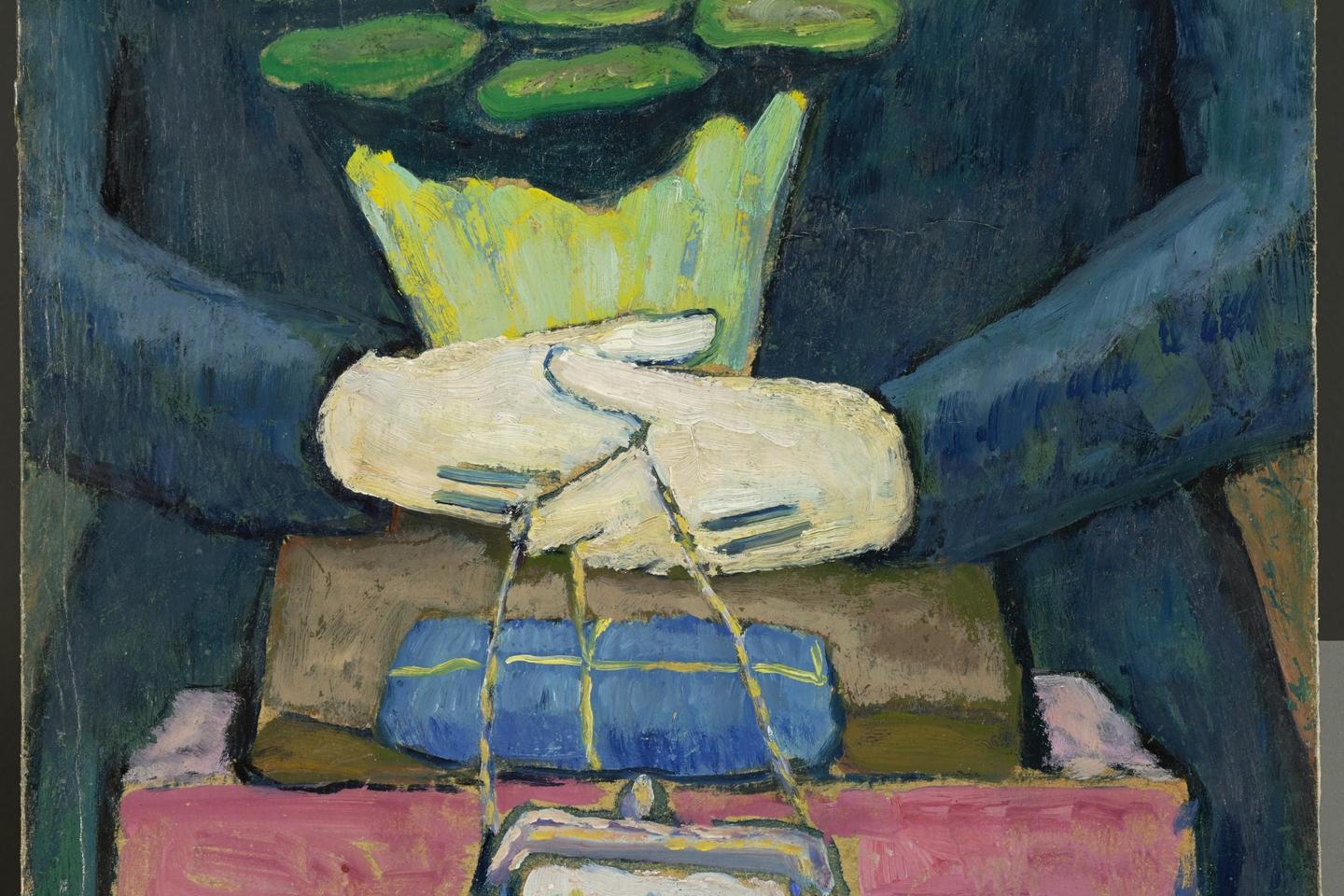

In recent years, there has been a remarkable surge in the recognition of artists who, historically, have been overlooked. This resurgence is especially important for female artists, whose contributions were often eclipsed by their male counterparts. One such artist is Gabriele Münter (1877-1962), a pivotal figure in the *Der Blaue Reiter* (The Blue Rider) movement, yet long overshadowed by her relationship with Wassily Kandinsky (1866-1944). While Kandinsky is celebrated as a precursor of abstract art, Münter’s own work, filled with innovation and emotional depth, deserves equal attention.
The Musée d’Art Moderne in Paris has recently opened its first retrospective dedicated to Münter, and it promises to be a revelation. Unlike many exhibitions that leap straight into the canvas, this one begins with a series of photographs taken during her travels, particularly in the United States (1898-1900) and later in Tunisia in 1905 alongside Kandinsky. These black-and-white images reveal her innate talent for composition and framing . Her first camera, a Kodak Bull’s Eye, marked the beginning of her photographic journey, and the museum showcases a selection of these stunning images alongside her paintings.
One aspect that stands out in Münter’s photography is its intimacy . The images are not merely landscapes or group shots; they are imbued with a sense of personal connection. For instance, her portrayal of family members and friends shows a tenderness that invites viewers to engage with the subject on a deeper level. This sensitivity informs her painting style, as she makes use of color and form to convey emotions rather than simply represent reality.
Münter’s artwork is characterized by a distinctive blend of expressionism and color theory , showcasing her confident brushwork and unique palette. As a co-founder of *Der Blaue Reiter*, she collaborated with like-minded artists who shared her vision of pushing the boundaries of traditional art. This movement emphasized the emotional and spiritual experience of art, moving away from the constraints of realism. Her pieces reflect this ethos, often merging vibrant colors with abstract forms that evoke a sense of movement and dynamism.
The retrospective offers a rare chance to examine her work in-depth, from early pieces that exhibit her figurative style to later works that hint at her progressive turn towards abstraction. Notably, the collection includes her iconic pieces like “Still Life in the Tramway” (circa 1909-1912) which encapsulates her ability to blend ordinary scenes with an extraordinary emotional depth. This piece exemplifies her exploration of everyday life and the interplay of light and color, capturing a moment that transcends time.
Moreover, the exhibition delves into Münter’s role within the historical context of early 20th-century art. She was not just a bystander but an influential artist who challenged the norms of her time. Her involvement with Kandinsky and other avant-garde figures allowed her to contribute to the dialogue around modernism and its many manifestations. This context is essential for understanding the evolution of her style and the significance of her legacy in the broader narrative of art history.
In the current landscape, where the visibility of women artists is crucial, this retrospective serves as a vital reminder of the importance of acknowledging and celebrating contributions that have been historically overshadowed. Gabriele Münter’s story is a testament to resilience , creativity, and the enduring power of art to influence and inspire. By bringing her work to the forefront, the Musée d’Art Moderne not only honors her memory but invigorates the ongoing conversation about gender equity in the arts. Visitors are encouraged to explore her journey, not only as an artist but as a pioneering figure who deserves her rightful place in the annals of art history. As such, this exhibition stands as a beacon of awareness and appreciation for all artists whose voices have been historically marginalized.