
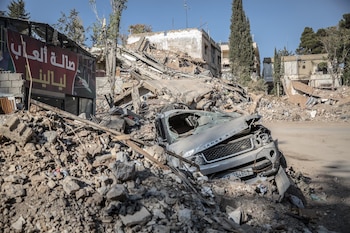
Lebanon authorities reported the loss of at least one life following an assault on Tuesday carried out by the Israeli army in the town of Bital, located in the eastern region of the country. The incident has triggered alarm and condemnation amidst ongoing tensions in the area.
According to the Lebanese Ministry of Health, the attack involved a bombing from the Israel Defense Forces (IDF) targeting a vehicle in this municipality, which lies in the Baalbek governorate, close to the Syrian border. The report confirms that this strike resulted in at least one fatality. The health ministry conveyed the update through the state news agency NNA, highlighting both the tragedy and the urgent need for accountability.
While Israel has not publicly acknowledged its involvement in this incident, the nation has historically defended its military operations in Lebanon under the pretext of combating threats posed by the Hezbollah group, a prominent Shiite political party and militant organization based in Lebanon. Israeli authorities argue that they do not violate the ceasefire established in November 2024, purportedly maintaining operations aimed at disrupting Hezbollah’s activities. This assertion has been met with skepticism and criticism from both the Lebanese government and Hezbollah itself, who have condemned such military actions.
The ceasefire agreement reached after a brutal series of confrontations initiating on October 7, 2023, mandated a withdrawal of forces from southern Lebanon by both Israel and Hezbollah. Despite this accord, the Israeli army has retained five military positions within Lebanon’s territory, triggering outrage and demands for the immediate cessation of these deployments from Lebanese leaders as well as from Hezbollah. The ongoing military presence has raised questions regarding the legitimacy of the ceasefire and whether such actions constitute a breach of international norms.
Hezbollah, which was established in 1982 during the Lebanese Civil War, has transformed into a significant political and military force in the region. Their declared objectives include resisting Israeli occupation and supporting the Palestinian cause. The organization’s military strength poses a serious challenge to Israel, leading to frequent cross-border conflicts. Lebanon’s delicate political landscape is further complicated by the ongoing strife between Iran, Hezbollah’s primary backer, and Israel.
The United Nations has echoed criticisms directed at both Israel and Hezbollah, advocating for a re-establishment of peace and political stability in the region. The international body has urged both parties to adhere to existing ceasefires and engage in comprehensive dialogue aimed at fostering long-term resolutions to their disputes.
As the situation continues to unfold, tensions in Lebanon remain palpable. The humanitarian implications are severe. Civilians continue to bear the brunt of these military encounters, leading to displacement, loss of life, and a deterioration of living conditions. With the economic crisis in Lebanon already reaching critical levels, incidents like the recent bombing compound an already complex humanitarian situation.
The rise in violence serves as a grim reminder of the fragility of peace in the region. Both internal and external pressures contribute to the dynamic and often volatile interplay of politics, military engagement, and humanitarian crises. The need for diplomatic engagement and conflict resolution strategies cannot be overstated as Lebanon grapples with its intricate web of challenges.
The involvement of regional powers in the ongoing conflict adds yet another layer of complexity. Iran’s support of Hezbollah and Saudi Arabia’s historical alliance with Lebanon’s political factions further complicates the landscape, often resulting in proxy battles that transcend national borders. In light of these dynamics, the need for sustained international diplomatic efforts remains critical. The larger geopolitical consequences of these skirmishes speak to a broader instability that threatens not only the countries involved but the region as a whole.
In light of the recent developments, the international community must remain vigilant and responsive to the evolving situation in Lebanon. Continued support for humanitarian efforts and a commitment to diplomatic resolutions are vital to preventing further escalation and alleviating the suffering of those caught in the crossfire of this protracted conflict. With Lebanon’s history of strife, a consolidated approach is essential for fostering peace and rebuilding trust among its peoples.
General News – 2