
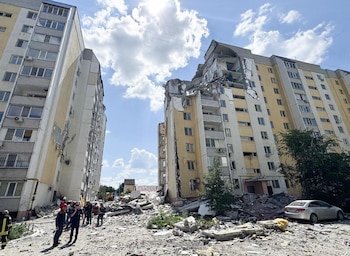
At least one civilian has died during the early morning of this Sunday as a result of an attack with Ukrainian non-manned aerial vehicles on the Russian region of Saratov . This attack has significantly impacted local infrastructure, affecting an industrial company and causing disruption at the Regional Airport due to the drone launches carried out by Kyiv .
The governor of the region, Roman Busargin , reported that “one of the drones (Ukrainians) has fallen into the courtyard of a residential building.” In response to the attack, residents were evacuated, and a temporary accommodation center was established in a nearby school. Tragically, the attack resulted in at least one fatality, with Busargin confirming that all affected individuals have received the necessary health care.
In light of this aggression, “temporary restrictions have been introduced to the acceptance and delivery of aircraft.” This highlights the seriousness of the situation as authorities scramble to contain the fallout from the attack.
Busargin had earlier notified the public that an industrial company in the region faced damage from the drone attack, although he did not specify the extent of the destruction. This incident is reflective of the ongoing conflict , persisting for over three and a half years since the Russian invasion of Ukraine . The violence continues despite ongoing discussions for potential peace negotiations aimed at achieving a permanent ceasefire , a process complicated by disagreements over possible territorial exchanges between the two nations.
The Impact of Drone Warfare on Civilian Life
The increasing use of drone technology in modern warfare has raised significant concerns about civilian safety . The attack in Saratov is an example of how drone strikes can have lethal consequences for innocent bystanders. Civilians are often caught in the crossfire, leading to loss of life and widespread fear in affected communities.
Many experts argue that the use of unmanned drones can escalate conflicts, making it easier for nations to engage in military actions without the immediate risk to their personnel. This shift in warfare dynamics raises ethical questions about the potential for unintended consequences that might arise from such tactical decisions.
The Broader Implications of the Conflict
The Saratov attack serves as a stark reminder of the volatile nature of the current geopolitical landscape. With Russia and Ukraine firmly entrenched in military actions, the prospects for peace seem increasingly distant. Amidst ongoing hostilities, discussions around possible compromises appear futile, primarily due to entrenched positions on both sides regarding territorial claims.
Furthermore, the international community is left grappling with the implications of this conflict. Countries worldwide are watching closely, and many are reconsidering their military strategies and alliances. The broader implications of ongoing drone warfare will likely shape future military doctrines, both for nations directly involved in the conflict and those monitoring the situation from afar.
As diplomatic channels remain strained, the potential for further escalation is high. The recent attack highlights the need for urgent diplomatic intervention and a collective effort to mitigate the humanitarian impact on civilian populations. Civilian safety must remain a priority as nations work towards a sustainable solution to the ongoing conflicts.
In summary, the ongoing conflict between Ukraine and Russia continues to have devastating repercussions, particularly on innocent civilians. The recent drone strike illustrates the grave consequences of asymmetric warfare , underscoring the urgency for robust diplomatic dialogue aimed at finding long-term resolutions. We must not lose sight of the human cost of war, advocating for peaceful resolutions over continued violence and hostility.