
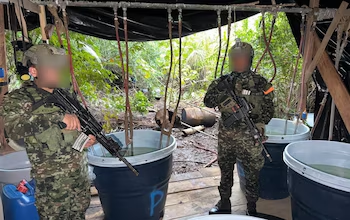
Major Drug Lab Dismantled in Nariño, Colombia
An extensive operation by national authorities has successfully dismantled a significant cocaine production laboratory in Nariño, attributably linked to FARC dissidents. This coordinated effort involved the National Army, National Police, DEA, and the Colombian Aerospace Force (FAC), and has had a major impact on the drug trade in the region.
Operation Details and Seizures
The operation targeted a complex dedicated to coca cultivation, where authorities seized nearly two tons of cocaine. The successful intervention has effectively thwarted the distribution of almost two million doses of cocaine, blocked from being trafficked through various routes leading into Ecuador and subsequently towards the United States. The drugs were set to move through international waters near Guatemala, Honduras, and Mexico.
Investigative efforts by the DEA and Colombian police revealed that the laboratory had been operating at a staggering production capacity of two tons per week, with its infrastructure valued at $2.5 billion. This substantial seizure marks a significant blow to the finances of the illicit organization involved.
Findings at the Site
According to a statement from the National Army, the coca complex comprised six structures, where 1,710 kilograms of cocaine hydrochloride and nearly 700 gallons of cocaine in suspension were confiscated. In addition, authorities recovered essential equipment and machinery used in narcotics production.
The operational facility also included accommodations capable of housing 30 individuals, complete with fresh supplies, microwave ovens, tempering tables, and power generators. The presence of such comprehensive resources highlights the extensive nature of this illicit operation.
Location and Coordination Efforts
The operation took place in Trejos del Mar village, within the municipality of Mosquera, Nariño. The mission was executed by the Command Against Drug Trafficking and Transnational Threats in collaboration with various law enforcement agencies, including the Colombian Aerospace Force, the Directorate of Criminal Investigation, Interpol, and the DEA.
The success of this operation underscores the effectiveness of inter-institutional cooperation in combatting drug trafficking and disrupting the activities of criminal organizations in Colombia.
Conclusion
The dismantling of this major cocaine production laboratory not only disrupts the supply chain of illicit drugs but also weakens the financial underpinnings of associated criminal networks. As international efforts continue to combat drug trafficking, this operation serves as a reminder of the complexities and challenges involved in maintaining law and order amidst persistent challenges posed by narcotics proliferation.