
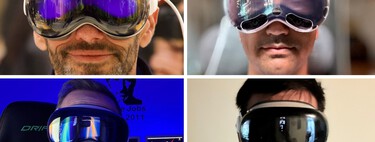
Apple’s Vision Pro: A Technological Leap or a Stagnant Product?
When I reviewed the Vision Pro over a year ago, I noted there was “incredible potential in an imperfect product.” Fast forward to today, and Apple has introduced the Vision Pro equipped with the new M5 chip, but the sentiment remains largely unchanged—only more uncomfortable. The imperfections inherent in the experience continue to plague users, leading many to feel a sense of disappointment.
Despite the undeniable potential of this innovative device, it seems Apple has lost its fervor for what it once heralded as the dawn of a new era in “spatial computing.” The so-called “second generation” of Vision Pro is more of a rehash than a substantial evolution, adding only a new chip, a few minor adjustments to the panels, and an optional head strap; this is a tacit confession of maintenance mode. When Apple opts to update a product with merely a new processor, it signals to consumers that it has not invested enough effort to provide a revolutionary upgrade.
This kind of status quo is not uncommon in tech products. Apple has previously placed offerings like the Mac mini and AirPods into similar phases before rolling out significant redesigns. Yet, what’s concerning here is how long this stage is beginning to feel entrenched.
It has now been 28 months since the original announcement of the Vision Pro in June 2023. Tim Cook boasted of the “beginning of a new era of spatial computing,” using language typically reserved for monumental occasions. Yet, this new era appears to be stuck in its first act, with minimal advancements to show for it:
- Limited Global Presence: The device is available in only nine countries, none of which have been added since summer 2024.
- Content Catalog Stagnation: The material available for the Vision Pro is progressing at a near glacial pace.
- Price Point Remains Fixed: The hefty price of $3,500 plus taxes continues to linger, making potential users hesitant.
The primary challenge Apple faces is two-fold: they can’t eliminate the Vision Pro from their lineup without admitting a mistake, and simultaneously, they can’t push the product forward because they seem uncertain on how to do so. Although Apple has plans for more mixed or augmented reality products, their arrival appears to be a distant prospect, leaving the Vision Pro in an odd form of limbo. This state is characterized by the device receiving just enough updates to feign life, but not nearly enough to foster genuine growth, presenting a façade of normalcy that poorly conceals internal confusion.
Interestingly, Apple’s own marketing strategy underscores this predicament. The company has prioritized its recent launches—such as the MacBook Pro and iPad Pro—leaving the Vision Pro relegated to a corner of their website, effectively indicating that it no longer holds the company’s focus.
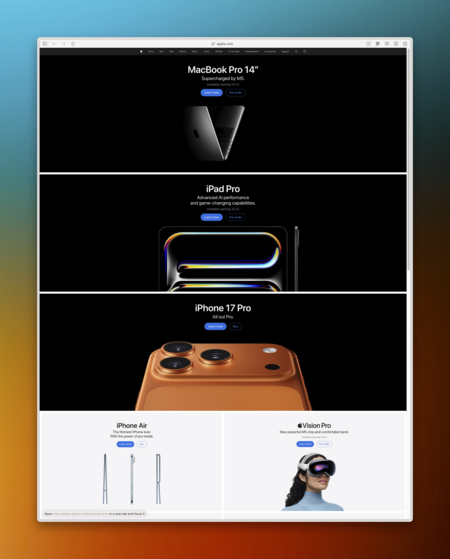
Apple website in the United States after today’s triple announcement. The Vision Pro, relegated in priority. Image: Apple.
The shift from the M2 to the M5 chip might yield an additional 30 minutes of battery life and a minor bump in refresh rate—an extra 20 Hz—which are improvements that generally accompany any annual iPhone update. This comes as an implicit acknowledgment that the revolutionary promise surrounding the Vision Pro has plateaued. The real issues—such as weight, social isolation, a lack of distinct use cases, and its exorbitant price—remain unresolved. Apple seems to be bandaiding a situation that necessitates a fundamental overhaul.
In summary, as it stands, the Vision Pro is a device with remarkable potential that has unfortunately fallen into a quagmire of its own making. With a signal of stagnation from its parent company, the future of the Vision Pro remains uncertain. Without significant innovation and a broader scope of utility, it might not seize the groundbreaking potential initially envisioned, risking being just another relic in the ever-evolving history of technology.