
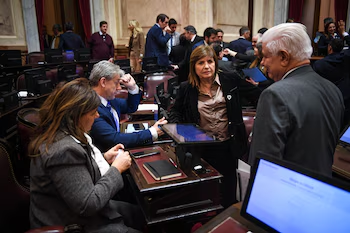
A Bulging Legislative Agenda: The Senate’s Challenges Ahead
The Argentine Senate faces a whirlwind of complex issues poised to dominate its agenda until the year’s end. With a plethora of libertarian projects stalled and legislative chambers that are currently blocked, the Senate’s time frame is increasingly strained. This article delves into the intricacies of the Senate’s legislative challenges, funding concerns, and the potential impact of upcoming projects.
Current Legislative Landscape
A considerable number of libertarian proposals, pivotal to the ruling party’s agenda, are at a standstill. Recently, legislators secured a significant increase in allowances—over 12 million pesos—prior to winter recess. This funding boost alleviates some concerns but highlights the necessity for decisive actions regarding the stalled projects.
Among the most pressing issues is the contentious private property initiative, which is undergoing intense debate. Minister of Deregulation Federico Sturzenegger has identified this issue as crucial; however, it remains entangled in party politics, with numerous drafts competing for attention. As the August 6 deadline approaches, the viability of the “Hojarasca” law, aimed at eliminating outdated regulations, hangs in the balance. The successful passage of these laws is complicated by Senator Patricia Bullrich’s shifting focus toward her personal ambitions, leaving the legislation exposed and vulnerable.
Mental Health Law Revisions
Underpinning the Senate’s agenda is the pressing need for revisions to the mental health law. The director of the comprehensive approach to mental health, Liliana Gonzalez, recently remarked on the inadequacies of the existing law, suggesting that significant reforms are overdue. While there are plans to push for further reforms post-recess, the initial enthusiasm surrounding these changes has noticeably waned.
Overlooked Initiatives and Political Reform
Several key initiatives, including gambling addiction prevention and product labeling reforms, have not garnered the attention they deserve. Recently, the super RIGI bill, already approved in the lower house, was sent to three different commissions, indicating a diminishing capacity to build consensus and garner support.
Meanwhile, the government is eager to expedite modifications related to tax legislation, which raises concerns about legislative irresponsibility when recent laws are altered mere months after enactment. Political reform anxieties are rising, yet there seems to be little movement in suspending or amending measures.
The Road Ahead
As the Senate anticipates addressing numerous critical issues, the government’s aspirations hinge on reducing financial burdens and preparing for the 2027 budget to be sent to Deputies by mid-September. The looming deadline adds pressure to the legislative agenda, which is often hindered by procedural bottlenecks.
The executive branch is also promoting changes to the Organic Charter of the Central Bank and potential regulations to avoid governmental shutdowns in case of spending law disagreements, echoing urgent calls for accountability.
Conclusion: A Legislative Tightrope
In summary, the Argentine Senate’s agenda is characterized by a tangle of ambitions and obstacles, necessitating realignment and cooperation among political factions. The path forward will heavily depend on how effectively the libertarian party addresses internal divisions and public sentiment. As the governmental majority seeks to balance electoral interests with legislative action, the next few months will be crucial for shaping the political landscape of Argentina.