
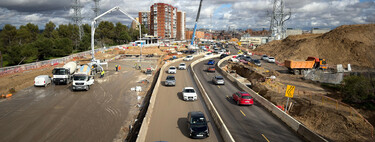
The Stalled A-43 Highway: A 30-Year Journey Towards Completion
The A-43 highway, intended to create a crucial connection between Ciudad Real and Extremadura, has been hampered by delays for nearly three decades. First proposed in the General State Budgets of 1997, the project remains unfinished, complicating transportation in the region. The ongoing administrative limbo further exacerbates the issue, as the final route remains undecided.
Historical Context: Learning from the Romans
Interestingly, this modern dilemma echoes a solution the Romans found over two millennia ago. Historical evidence suggests that the Roman roads took a southern route, a decision made possible by geographical considerations that still hold relevance today.
The Current Situation: Importance of the N-430
Presently, the N-430 is the sole national highway linking Ciudad Real and Extremadura. According to the El Periódico de Extremadura, this route is notorious for heavy traffic, high volumes of goods transport, and a troubling record of accidents. The urgency of addressing this situation was illustrated in June 2025 when over 1,500 protesters rallied in Santa Amalia under the poignant slogan “No more deaths on our road.”
Project Details: What’s on the Horizon?
Recently, the Ministry of Transport approved the public information file for the first segment of the A-43, which will stretch 11 kilometers and run between Torrefresneda and Santa Amalia, with a budget of €78.31 million. This initial phase aims to connect with the A-5, further linking to the N-430. The design includes multiple junctions, overpasses, and viaducts.
However, this stretch represents merely a segment of the envisioned highway that should ultimately connect Extremadura to the Valencian Community. The route from Ciudad Real remains under debate; authorities are weighing options between following the northern path of N-430 or opting for a southern route through Puertollano.
The Lesson of Roman Infrastructure
A project called Itiner-e has meticulously mapped over 300,000 kilometers of Roman roads, revealing insights into ancient infrastructure practices. The Roman roads in the Ciudad Real area prefigured current highways, demonstrating that historical knowledge can guide present-day planning.
Notably, to connect with Extremadura, the Romans favored the southern route. They bypassed challenging northern terrain, opting instead for an easement that facilitated trade and movement—an approach that contemporary planners would do well to consider.
Moving Forward: Addressing the Challenge
Despite the advances made with the Torrefresneda to Santa Amalia section, the challenge of completing the A-43 remains significant. The project, stalled for years, needs comprehensive planning for its remaining segments. This includes defining routes in Ciudad Real and allocating the necessary budget for construction.
While historical pathways laid down by the Romans endure as a testament to effective planning, Spain now faces a critical crossroad regarding the A-43’s future. Its timely completion could transform not just infrastructure but the socio-economic landscape of the region.