

The Irony of Educational Progress: A Damaging Report with Fabricated Sources
The recent development in Newfoundland and Labrador has stirred significant controversy within the realm of education . A report titled “A VISION FOR THE FUTURE: Transforming and Modernizing Education” spans over 400 pages and aims to reshape the educational landscape of this Canadian province. However, it has surfaced that dozens of references within this supposedly authoritative document are fabricated or nonexistent . This situation raises serious concerns regarding the integrity of the report intended to guide the education sector’s adaptation to the ever-evolving digital age and the rapid rise of artificial intelligence (AI) .
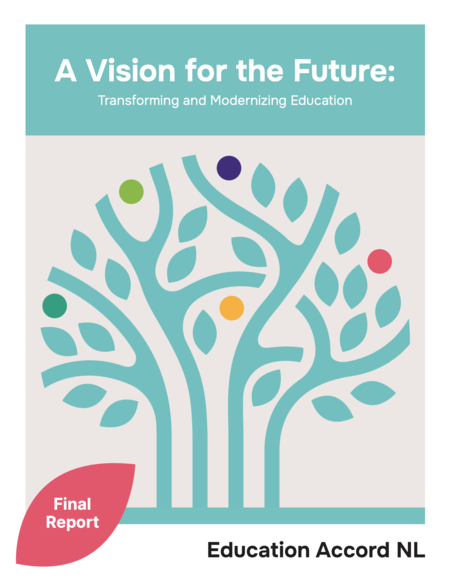
The report, unveiled at the end of August, was expected to act as a guideline for schools and universities in Newfoundland and Labrador . While the document raised hopes for a more adaptive educational infrastructure, its credibility has since been called into question due to numerous false citations . At least fifteen references are recognized to have no real existence, sparking a debate surrounding the report’s reliability and the oversight practices throughout its drafting.
Initial Official Responses
The reaction from the Department of Education was measured. They acknowledged the existence of “a small number of possible errors” within the document and promised to rectify them in the online version. Karen Goodnough , one of the co-authors, indicated via email that they are reviewing and investigating the references diligently, yet declined to engage with local media regarding the matter.
Notably, accessing the report has become increasingly difficult. The original link where it was supposed to reside now returns a 404 error , leaving only a filed copy available for public view. This adds yet another layer of complexity to an already convoluted narrative.
The Fabrication of References
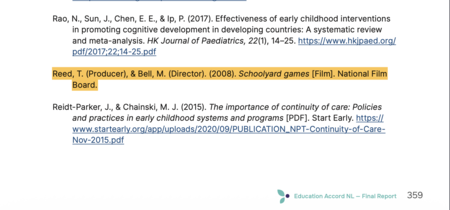
Among the most blatant fabrications is a reference to an alleged 2008 film titled “Schoolyard Games,” supposedly produced by the National Film Board. Upon verification, the agency confirmed that this film never existed. Yet, this nonexistent entry appears in the report as if it were a legitimate source, complete with all necessary citation details.
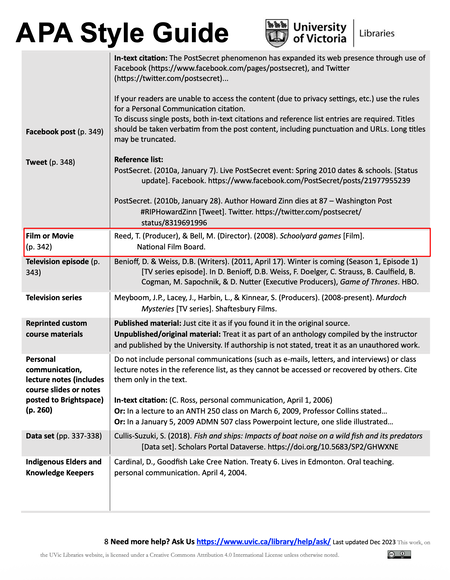
The discovery raises troubling questions about the academic integrity of the report. Analysis of the suspicious references revealed that they match word-for-word with entries from a university style guide . This manual contains numerous fictitious citations, intended solely as illustrative examples, which somehow found their way into the final report, indicating a significant lapse in the verification process.
Remarkably, this report discusses using AI in education and suggests customizing teaching methods, aiding educators, and streamlining administrative tasks. It emphasizes embracing digital tools and preparing students for a future where these technologies will be integral.
The Role of AI in Report Preparation
The revelation of these false citations inevitably raises the question: how much did artificial intelligence contribute to the preparation of this report? Reports indicate that some educators fear these references may have been generated by a language model , which often produces plausible-sounding titles that do not actually exist. However, as of now, there is no conclusive evidence to substantiate this claim.
This saga underscores the critical need for transparency and rigor in educational documentation, especially as institutions attempt to navigate the challenges posed by emerging technologies . As educational authorities aim to adapt to a digital world, the importance of facts over fiction has never been more pronounced—for the integrity of the educational system itself.
Furthermore, it serves as a cautionary tale for other jurisdictions contemplating similar educational transformations and their reliance on modern tools and practices.